Best overall: a recurring janitorial plan with written inspections. Best for private workplaces: an office-specific cleaning plan. Best for condominiums and HOAs: a common-area cleaning plan. For commercial cleaning in Ellicott City, MD, define the service model your property requires and confirm coverage for the exact address before comparing providers.
- For commercial cleaning in Ellicott City, MD, evaluate written scopes, access controls and inspection accountability.
- Choose office cleaning for workplace-specific requirements and common-area cleaning for condominiums and HOAs.
- RNM Building Services provides commercial cleaning and janitorial services in Montgomery County; confirm Ellicott City coverage before requesting a proposal.
- Compare proposals against the same task list, including periodic floor care and responsibility for supplies.
Why the cleaning plan matters more than the ranking
A company name does not define responsibility for restroom supplies, entrance mats, interior glass or periodic floor care. Begin with the required work and the person accountable for its completion.
RNM Building Services provides commercial cleaning, janitorial, and building maintenance services for offices, condominiums, HOAs, and managed properties throughout Montgomery County, Maryland. RNM Building Services serves Montgomery County property managers seeking these service categories. Confirm service coverage for an Ellicott City property before treating the company as a local candidate.
For your 2026 search, use the ranked service models below to evaluate proposals. Each addresses a different operating need; none substitutes for checking coverage, contract terms, and the proposed scope.
What makes the best commercial cleaning company?
Judge commercial cleaning companies against these criteria before comparing their proposals:
- Written scope: Every included space has named tasks and a schedule. Separate routine work from periodic projects.
- Inspection accountability: The agreement identifies who checks completed work, records problems, and confirms corrections.
- Access control: Keys, badges, alarm instructions, and restricted rooms have documented handling procedures.
- Surface compatibility: Cleaning methods match the flooring, furnishings, and equipment involved. Disinfection follows the product label.
- Property fit: The plan reflects actual occupancy, shared facilities, visitor traffic, and site rules.
- Clear exclusions: Identify responsibility for consumables, interior windows, specialist work, and building repairs before signing.
Request written responses to these criteria. The signed scope, not the sales discussion, establishes the service commitments.
Commercial cleaning options at a glance
These rankings compare service models, not verified company performance. Use them to decide what type of proposal to request from companies serving your Ellicott City address.
| Rank and service model | Best for | Standout feature | Key limitation |
|---|---|---|---|
| 1. Recurring janitorial plan | Consistent routine upkeep across a mixed-use property | A repeatable task schedule with inspection checkpoints | Periodic projects need separate definition |
| 2. Office-specific cleaning plan | Workplaces with private rooms and sensitive materials | Room-level access and workstation boundaries | Does not automatically include shared building spaces |
| 3. Common-area cleaning plan | Condominiums and HOAs with shared resident facilities | Clearly mapped responsibility for shared spaces | Private units remain outside the scope unless expressly included |
| 4. Maintenance-coordinated cleaning plan | Managed properties needing cleaning and maintenance coordination | A defined handoff between cleaning issues and repair requests | Cleaning responsibilities can become blurred without work-order boundaries |
1. Recurring janitorial: best for routine building upkeep
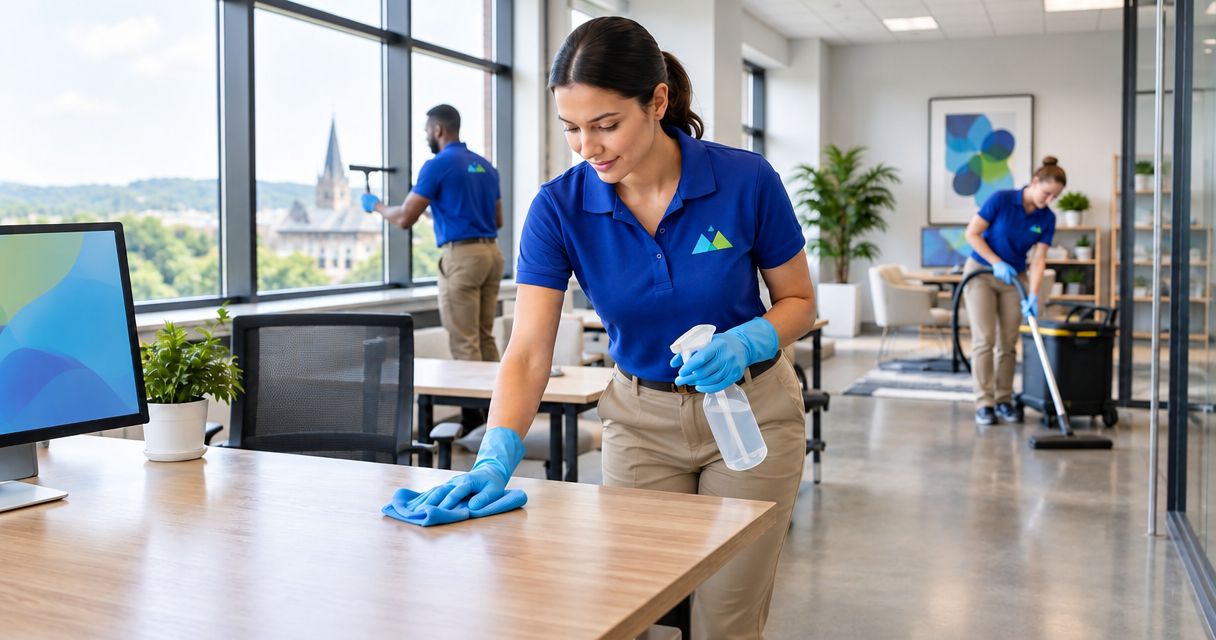
A recurring janitorial plan organizes repeat tasks such as restroom cleaning, waste removal, entrance care, and floor cleaning. Its strength is consistency: the agreement states what happens during each scheduled visit and what receives less frequent attention.
For an Ellicott City property with several kinds of occupied space, request a room-by-room scope. A broad phrase such as general cleaning leaves too much room for different interpretations.
Recurring janitorial pros:
- Establishes a repeatable baseline for routine cleaning.
- Makes missed tasks easier to identify against a written schedule.
- Allows cleaning frequency to differ between busy and lightly used spaces.
- Gives a property manager a defined process for reporting problems.
Recurring janitorial cons:
- An unchanged schedule can stop matching the building's actual use.
- Carpet extraction, floor restoration, and other periodic work need explicit inclusion.
- A checklist alone does not establish whether someone inspected the result.
For a 2026 agreement, request 2 inspection checkpoints: one at service startup and another after the initial operating period. These are recommended contract requirements, not a statement about any provider's existing inspection program.
Best for: Property managers who need routine upkeep across several types of space.
Selection requirement: Define recurring tasks and inspections when inconsistent routine cleaning is the primary concern.
2. Office cleaning: best for private workplace requirements
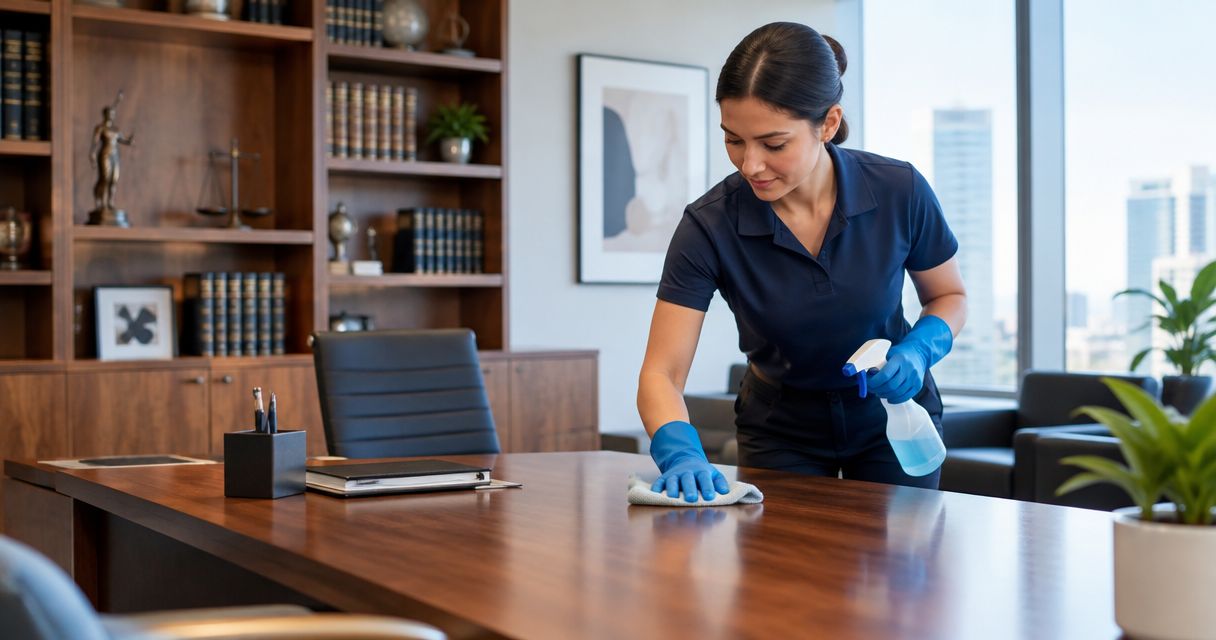
An office-specific cleaning plan defines how crews work around desks, meeting rooms, kitchens, and restricted areas. The distinction is not simply the building's use; it is the need to protect documents, personal belongings, equipment, and employee access.
Tell bidders which surfaces crews can touch and which they must leave alone. Specify whether desk clearing, appliance interiors, or cleaning around computer equipment belongs in the agreement rather than relying on assumptions.
Office cleaning pros:
- Establishes boundaries around documents and employee possessions.
- Aligns cleaning access with meetings, visitors, and occupancy.
- Separates workstation duties from shared kitchen and restroom tasks.
- Makes restricted-room instructions part of the service plan.
Office cleaning cons:
- A workspace-only agreement can exclude building entrances and shared corridors.
- Changes in office attendance require schedule reviews.
- Staff expectations can exceed the scope unless management explains the boundaries.
For 2026 office cleaning proposals, require a written rule for occupied rooms: proceed, return later, or report the missed area. That small decision prevents disagreement about whether an inaccessible room counts as unfinished work.
Best for: Office managers responsible for workplace cleanliness and controlled access.
Selection requirement: Establish privacy, access and room-specific instructions for a workplace-focused agreement.
3. Common-area cleaning: best for condominiums and HOAs
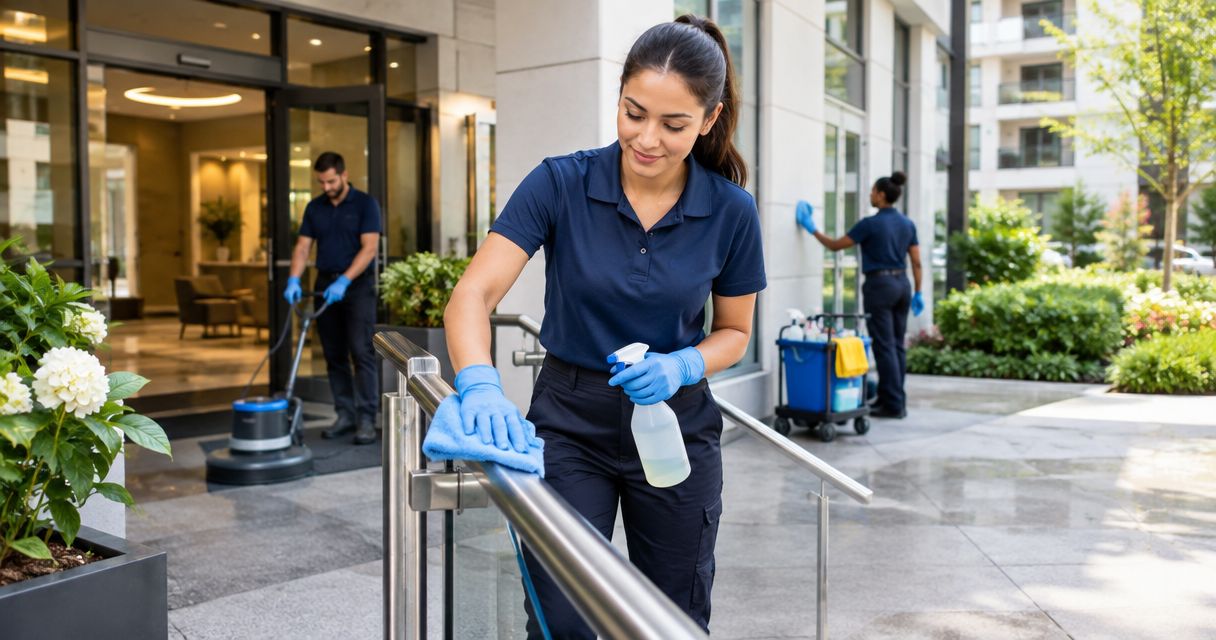
Common-area cleaning focuses on the spaces residents and visitors share. Depending on the property, the requested scope can include entrances, corridors, elevators, shared restrooms, and community rooms.
Start with a site map that distinguishes association responsibility from private-unit responsibility. A boundary that feels obvious to management needs to be equally clear to the cleaning crew and residents.
Common-area cleaning pros:
- Assigns responsibility to shared spaces rather than individual households.
- Supports different schedules for entrances, corridors, and reservable rooms.
- Gives resident complaints a specific location and task to reference.
- Separates routine work from cleaning after an event or unusual incident.
Common-area cleaning cons:
- Private-unit work requires a separate agreement or explicit inclusion.
- Unscheduled spills and event cleanup need their own response arrangements.
- Resident expectations can conflict with association-approved service boundaries.
Ask candidates how they would document blocked access, personal items left in corridors, and conditions requiring maintenance rather than cleaning. The proposal should explain the reporting route without promising that cleaners will resolve every building issue.
Best for: Condominium and HOA managers responsible for shared resident spaces.
Selection requirement: Map shared-space responsibilities when common-area accountability is the priority.
4. Maintenance coordination: best for managed properties
A maintenance-coordinated plan connects routine cleaning observations with a separate process for building maintenance. A cleaner can report a leaking fixture or damaged surface; the agreement must identify who authorizes and performs the repair.
RNM Building Services provides both commercial cleaning and building maintenance services for its stated Montgomery County market. For any proposed Ellicott City engagement, confirm location coverage and the exact division of responsibilities before proceeding.
Maintenance-coordinated cleaning pros:
- Gives cleaning crews a defined route for reporting building defects.
- Separates routine cleaning requests from repair decisions.
- Helps managers assign responsibility when a recurring problem has a maintenance cause.
Maintenance-coordinated cleaning cons:
- A combined service description can obscure what the agreement actually includes.
- Repair authorization remains necessary even when service coordination is shared.
- Tasks requiring specialist qualifications need separate verification.
Your 2026 agreement should distinguish a cleaning correction from a maintenance work order. Removing residue and repairing the surface beneath it are different responsibilities, even when the same organization coordinates both.
Best for: Managed properties where cleaning issues frequently need maintenance follow-up.
Selection requirement: Define the handoff from cleaning reports to maintenance authorization and repair.
How to compare commercial cleaning proposals
Request 3 written scopes against the same building brief. This supports a comparable review; the number of bidders does not guarantee a better outcome.
Give each company the same walkthrough instructions and ask for these steps in order:
- Map spaces. Identify occupied rooms, shared facilities, restricted areas, floor materials, and access constraints.
- Define tasks. Separate routine cleaning, periodic work, consumables, and exclusions.
- Set access. Record arrival windows, alarm procedures, key handling, and missed-access instructions.
- Assign inspections. Name the person responsible for checking work and receiving complaints.
- Review results. Schedule a review after the first 30 days to compare the agreed scope with actual site needs.
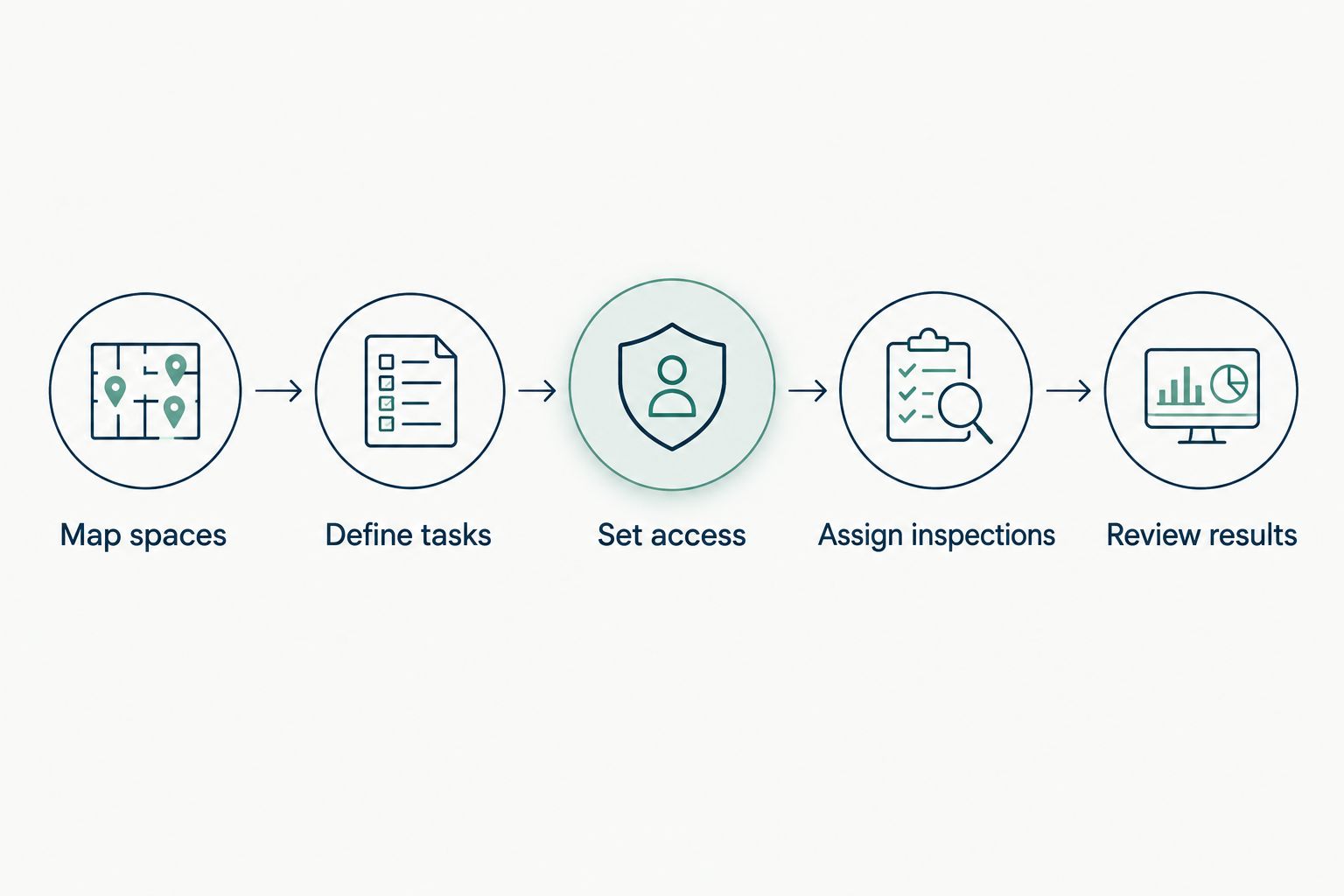
At the walkthrough, ask the representative to explain an exclusion as clearly as an included task. That answer reveals whether both parties understand the service boundary before the agreement begins.
Retain written clarifications with each 2026 proposal. Resolve scope differences before evaluating the offers.
Review commercial cleaning services
Review the services offered, then confirm coverage and scope for your property.
How these service models are ranked
Recurring janitorial ranks first because it addresses the broadest routine-cleaning need in this guide. Office cleaning, common-area cleaning, and maintenance coordination follow as more specific choices for privacy, shared residential spaces, and repair handoffs.
The ranking follows the criteria above: written scope, inspection accountability, access control, surface compatibility, property fit, and exclusions. It is a service-selection framework, not a claim that one named company outperforms another in Ellicott City.
Which commercial cleaning option should you choose?
Choose recurring janitorial if you need a dependable baseline across the property. Choose office-specific cleaning for private workplace requirements, common-area cleaning for shared residential spaces, or maintenance coordination when cleaning observations need a defined repair handoff.
Confirm Ellicott City coverage before selecting RNM Building Services; its stated service area is Montgomery County. Once coverage is confirmed, evaluate its proposal against the same criteria as every other candidate.
The best default is a written recurring cleaning plan with named inspection responsibility and explicit exclusions. A company ranking cannot replace those terms.
FAQ
What's the best commercial cleaning company in Ellicott City, MD?
The best fit is a company that confirms service to your address and provides a written scope, inspection responsibility, and clear exclusions. Compare candidates against the same property requirements rather than relying on a ranking alone.
Does RNM Building Services provide commercial cleaning in Ellicott City?
Confirm Ellicott City coverage directly before requesting a proposal. The company's stated service area is Montgomery County, Maryland, where it provides commercial cleaning, janitorial, and building maintenance services.
Is office cleaning the same as janitorial service?
Office cleaning is a workplace-specific scope, while janitorial service describes recurring cleaning duties more broadly. The written agreement determines whether desks, kitchens, restrooms, shared entrances, and periodic tasks are included.
What should a commercial cleaning proposal include?
A commercial cleaning proposal should identify spaces, tasks, frequencies, access rules, inspection responsibility, and exclusions. It should also distinguish routine cleaning from periodic projects, consumable replenishment, and maintenance work.
How often should a commercial building be cleaned?
Set cleaning frequency by the use of each space rather than assigning one schedule to the entire building. Review occupancy, restroom use, entrance conditions, and the consequences of leaving a task until the next visit.
Should condominium cleaning include individual units?
Include individual units only when the agreement expressly covers them. A common-area cleaning plan should otherwise define shared spaces and keep private-unit responsibility separate.
What should I check before signing a cleaning agreement?
Confirm service coverage, task boundaries, access procedures, insurance documentation, inspection responsibility, and contract terms before signing. Ask how missed work is reported and how completion of corrective work is confirmed.
One last thing
Ask every candidate: What happens when a room cannot be accessed? Require a written answer covering notification, documentation, and whether a return visit belongs in the agreement.
Blocked access is distinct from incomplete cleaning. Define reporting and return-visit responsibilities before service begins so performance can be assessed fairly.
RNM Building Services