Best starting point: RNM Building Services for a local condominium and HOA cleaning walkthrough. Best for routine upkeep: a recurring common-area janitorial contract. Best for budget control: a clearly bounded cleaning scope. This 2026 guide helps you evaluate condo cleaning services in Rockville, MD, without confusing residential housekeeping with managed-property cleaning.
- For condo cleaning services Rockville MD, shortlist RNM Building Services for a property-specific walkthrough and quote.
- Compare HOA cleaning proposals against the same written scope, not different task lists.
- Separate recurring condominium cleaning from carpet, floor restoration and exterior projects.
- Require named inspection responsibility, access procedures and a clear process for correcting missed work.
Why this matters
A condominium cleaning contract covers shared spaces used by residents, guests, contractors and building staff. Your board needs more than a clean lobby on inspection day; it needs an agreement that explains what gets cleaned, when, and who resolves a missed task.
RNM Building Services is a relevant local commercial cleaning candidate for Rockville condominium and HOA managers seeking recurring service. Its stated service area includes Montgomery County, and its services cover offices, condominiums, HOAs and managed properties.
This is a ranked buying guide to service approaches, not an unsupported league table of local companies. Use the options below to decide which type of contractor belongs on your shortlist, then verify each company's proposed staffing, oversight and scope during a walkthrough.
What makes the best HOA cleaning company?
For a 2026 contract, evaluate these criteria before comparing proposals:
- Written scope: Identify rooms, surfaces, tasks, frequencies and exclusions. Replace broad promises with observable work.
- Inspection ownership: Name the person responsible for checking work. Ask whether ownership participates and how findings reach your manager.
- Crew continuity: Ask how the contractor assigns dependable crews, handles absences and briefs replacement staff.
- Direct contact: Establish one contact for access changes, resident concerns, missed tasks and scheduled projects.
- Property fit: Match methods to the building's flooring, occupancy, amenities and access restrictions.
Treat licensing, insurance and bonding as verification items. Request applicable documentation rather than accepting an unqualified statement in a proposal.
The condo cleaning guide for HOA boards provides a related framework for organizing board requirements before soliciting bids.
HOA cleaning options at a glance
The ranking below separates distinct needs. A specialty project contractor is not a substitute for recurring janitorial coverage, and a residential housekeeping arrangement is not the same as a common-area contract.
| Ranked option | Best for | Standout fit | Key limitation |
|---|---|---|---|
| RNM Building Services | Local condominium and HOA contract discussions | Stated commercial cleaning and managed-property service focus in Montgomery County | Site-specific staffing, methods and inspection terms require confirmation |
| Recurring common-area janitorial contractor | Routine shared-space upkeep | A repeatable schedule tied to defined areas | Periodic restoration and exterior work need explicit inclusion |
| Specialty floor and carpet contractor | Defined surface-care projects | A task-specific scope based on surface condition | Does not replace recurring common-area cleaning |
| Exterior cleaning contractor | Outdoor cleaning projects | A separate plan for exterior surfaces and resident access | Does not cover indoor janitorial work unless expressly contracted |
1. RNM Building Services: best for a local contract discussion
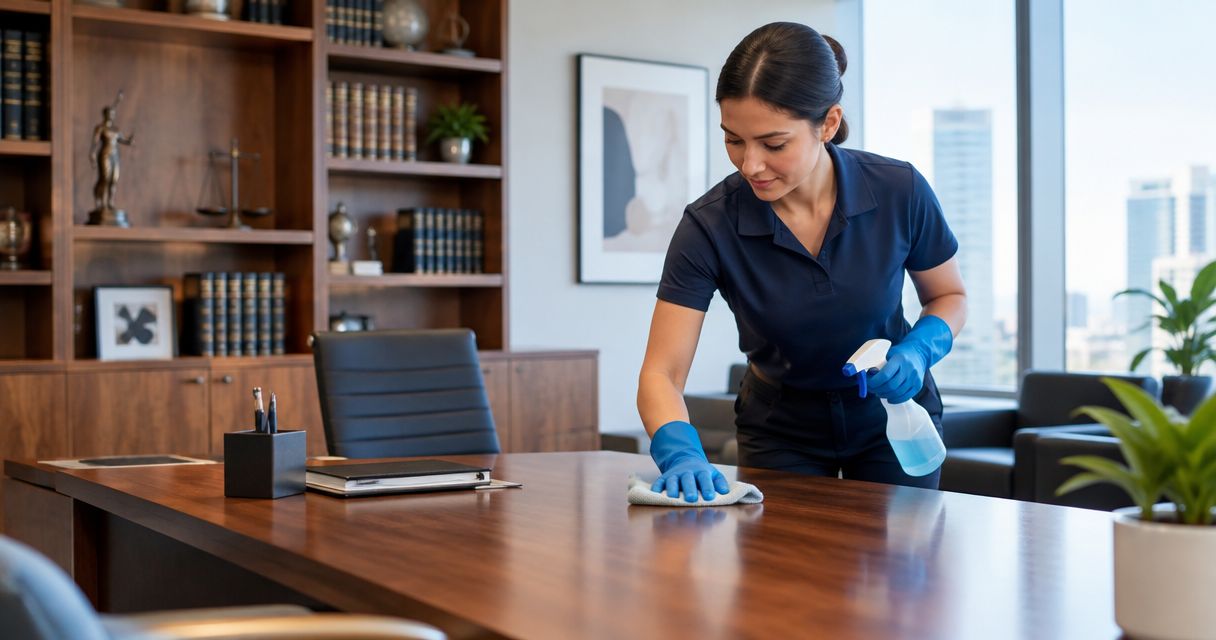
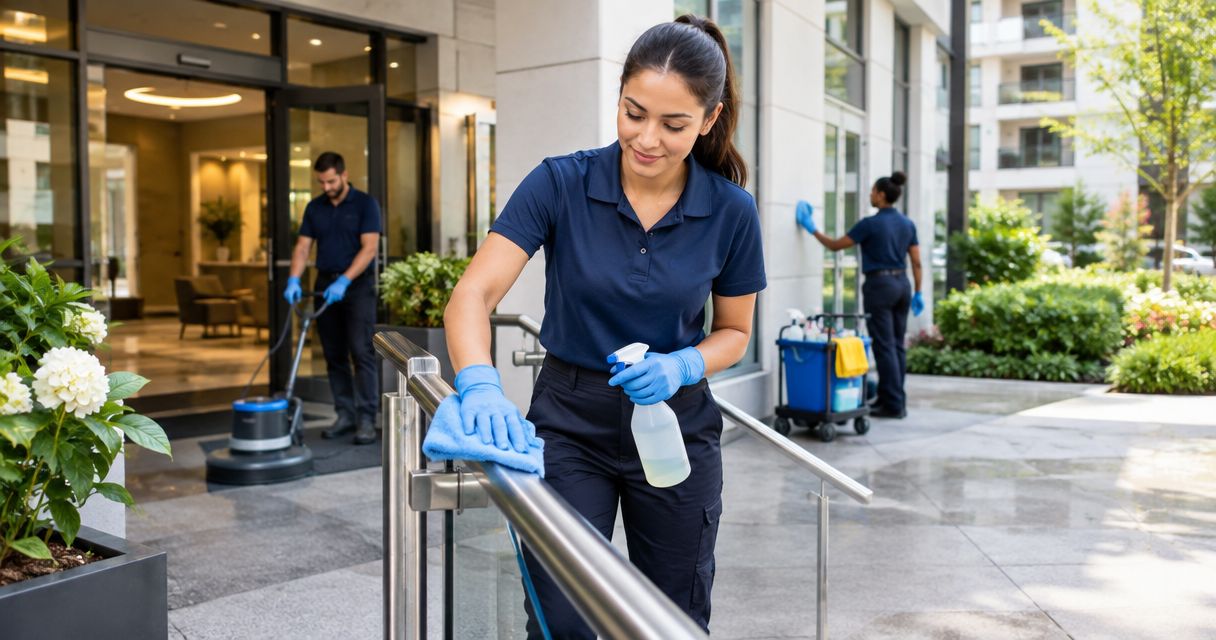
RNM Building Services provides commercial cleaning, janitorial and building maintenance services for offices, condominiums, HOAs and managed properties throughout Montgomery County, Maryland. That stated focus makes the company a relevant candidate for a Rockville property's recurring cleaning shortlist.
Use the walkthrough to turn that service fit into a building-specific proposal. Ask for a customized cleaning plan that identifies shared spaces, task frequencies, inspection responsibility and the direct contact accountable for service concerns.
Pros:
- Stated condominium and HOA service focus.
- Montgomery County service area matches the location under consideration.
- Commercial cleaning and building maintenance are both within its stated services.
Cons and limits:
- The building's exact staffing and schedule must be established in the proposal.
- Do not assume specialty treatments are included in recurring service.
- Obtain written inspection and escalation terms before approval.
Best for: Property managers and HOA boards seeking a local commercial cleaning discussion rather than residential housekeeping.
Verdict: Buy only after the walkthrough produces an acceptable written scope.
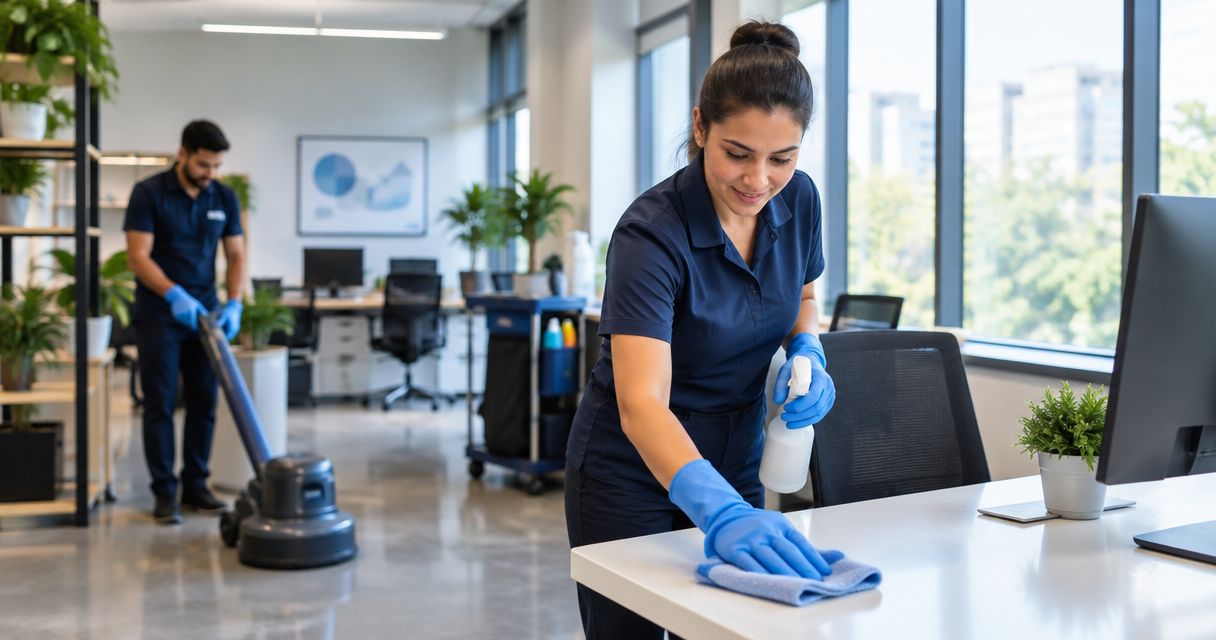
2. Recurring janitorial contractor: best for routine common areas
A recurring common-area janitorial contract organizes repeat tasks in shared interiors. Depending on your building's agreed scope, that includes entrances, corridors, elevators, stairs, amenity rooms and shared restrooms.
Evaluate the contractor on the operating plan, not the length of its service list. Your 2026 agreement should connect each area to a task, frequency, access window and inspection method.
Pros:
- Makes routine responsibilities explicit.
- Gives your manager a repeatable inspection checklist.
- Separates scheduled work from additional project requests.
Cons:
- An incomplete scope leaves responsibility gaps.
- Recurring cleaning does not automatically include restoration or deep cleaning.
- Fixed access windows require coordination with building activity.
Best for: Buildings that need dependable upkeep across occupied common areas.
Verdict: Buy for ongoing cleaning when the schedule and inspection process are documented.
3. Specialty floor contractor: best for surface-care projects
A specialty floor and carpet contractor addresses a defined surface-care requirement. Examples to discuss include hot-water extraction for suitable carpet and stripping and refinishing for compatible resilient flooring.
Ask the contractor to identify the material before proposing a treatment. Keep the project scope separate from recurring cleaning so the board can see preparation, access restrictions, drying requirements and responsibility for moving furnishings.
Pros:
- Focuses the proposal on a specific surface and condition.
- Makes preparation and reopening requirements easier to review.
- Gives the board a distinct acceptance checklist for the project.
Cons:
- Does not replace routine vacuuming or hard-floor cleaning.
- Requires coordination around resident movement.
- Methods must suit the actual flooring material.
Best for: Condominium managers addressing a defined carpet or floor-care need.
Verdict: Buy as a scoped project; skip as a substitute for recurring janitorial service.
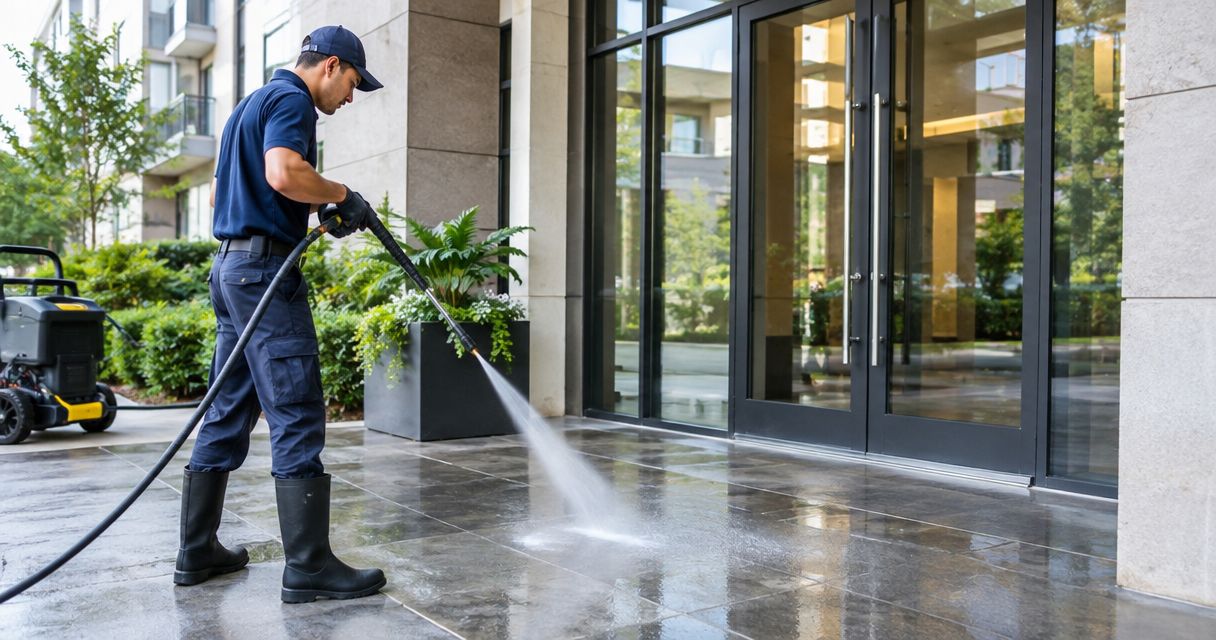
4. Exterior cleaning contractor: best for outdoor projects
An exterior cleaning contractor addresses specified outdoor surfaces rather than daily interior cleaning. Start with an inventory of walkways, entrances and other surfaces the association is responsible for maintaining.
Require the proposal to identify the cleaning method, surface protection, water arrangements and pedestrian controls. Do not specify pressure alone as the measure of suitability; the method must match the material and its condition.
Pros:
- Separates exterior responsibilities from indoor cleaning.
- Allows surface-specific methods and access planning.
- Creates a defined project for board approval and inspection.
Cons:
- Requires coordination around entrances and pedestrian routes.
- Does not address ongoing indoor cleaning needs.
- Surface condition and drainage require site review.
Best for: HOAs and condominium associations commissioning a defined exterior cleaning project.
Verdict: Buy when the surfaces, methods and resident protections are written into the scope.
Build a cleaning scope your board can inspect
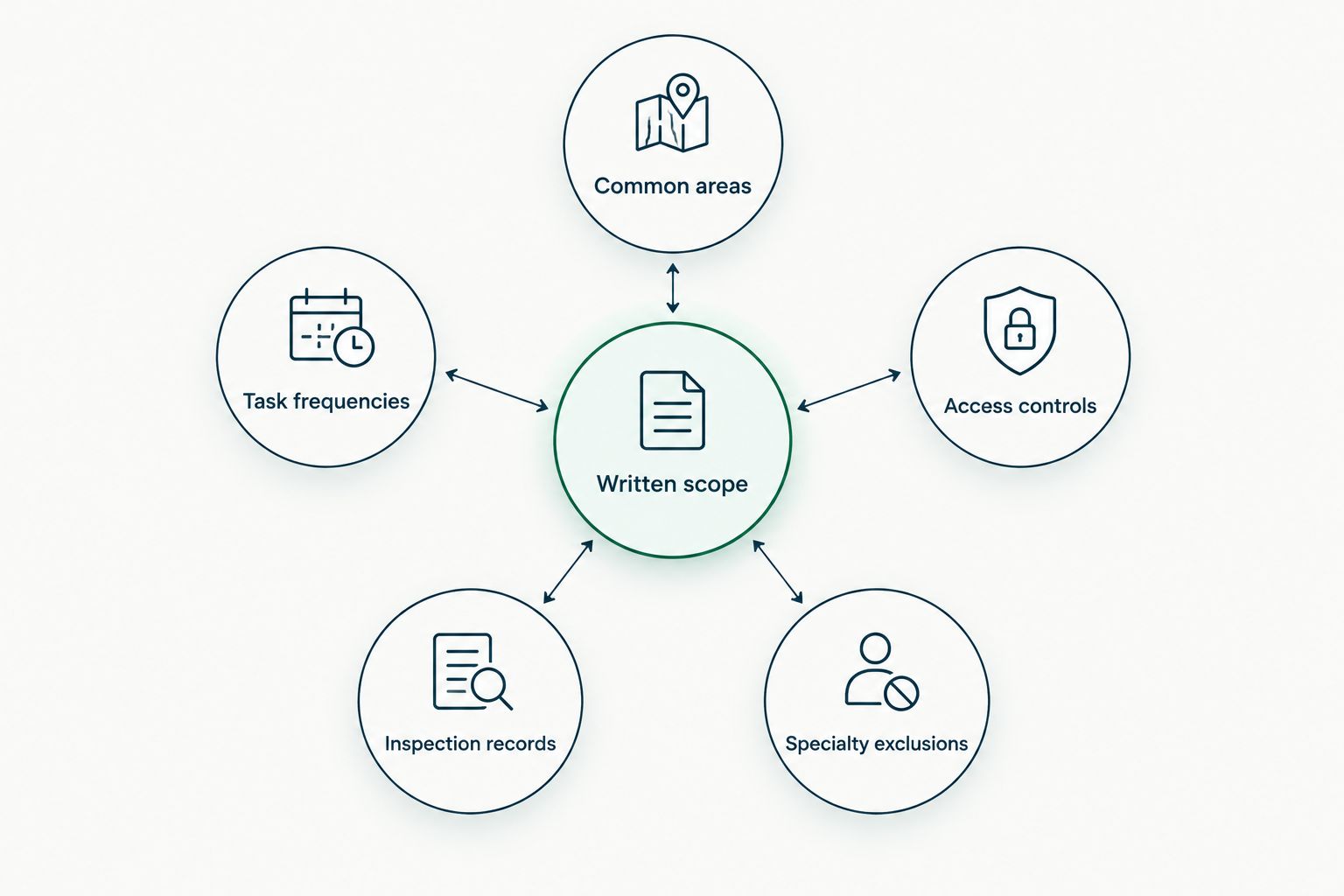
Before requesting proposals, prepare 1 shared scope document for every bidder. This is a procurement recommendation, not a requirement to fit every property into the same cleaning schedule.
Organize the document around these categories:
- Common areas: List entrances, lobbies, corridors, elevators, stairs and amenity spaces individually.
- Task frequencies: Assign the required frequency to vacuuming, damp mopping, dusting, glass cleaning and restroom tasks.
- Access controls: Identify keys, fobs, restricted rooms, service entrances and approved working windows.
- Inspection records: State who checks completion, where deficiencies are recorded and who receives the report.
- Specialty exclusions: Identify carpet extraction, floor restoration, exterior washing and other work that needs separate authorization.
A corridor entry should describe the surfaces and tasks, not merely say that the corridor will be cleaned. In shared restrooms, identify fixtures, floors, touchpoints, waste removal and replenishment responsibilities.
Keep private residences separate. A common-area agreement should not leave residents or staff assuming that individual units, private balconies or personal belongings are included.
Compare proposals without comparing different jobs
For your 2026 selection, request 3 comparable proposals when practical, all against the same scope. That number is a suggested procurement approach, not a claim about how many bids every association needs.
Read exclusions before reviewing the overall commercial terms. A proposal that omits stairwells, supplies or periodic work is not equivalent to one that includes them.
Ask each bidder to explain:
- Who supervises the assigned crew and handles absences.
- Who inspects the property and whether ownership participates.
- How missed work is reported, corrected and closed out.
- Which consumables and equipment are included.
- How additional work receives written authorization.
Request relevant managed-property references and confirm that the proposed service arrangement matches what those references received. A reference for a one-time project does not establish the contractor's recurring service process.
Separate exterior washing from recurring cleaning
When preparing a 2026 property budget, treat exterior washing as its own scope unless the recurring agreement explicitly includes it. Give every bidder the same surface inventory and access restrictions.
A meaningful comparison of HOA pressure washing costs starts with matching the work: surface types, cleaning methods, water arrangements and resident access controls. A proposal covering entrance walks is not equivalent to one covering a broader set of association-maintained surfaces.
Walk the exterior with the contractor. Identify vulnerable finishes, nearby landscaping, drainage paths and entrances that must remain usable, then require the proposal to explain how those conditions will be handled.
Assign approval responsibility before work begins. Your manager should know who authorizes scope changes and who confirms that the project is complete.
What affects a customized cleaning quote?
Keep the discussion quote-based. The factors that need site review include cleanable area, flooring materials, restroom count, building activity, task frequency, access restrictions and the condition of the property at service commencement.
Discuss these details during the walkthrough:
- Service boundaries: Which buildings, floors and shared rooms are included?
- Cleaning condition: Is initial corrective work needed before recurring upkeep starts?
- Working windows: Must the crew avoid meetings, deliveries or resident activities?
- Supply responsibility: Who provides liners, paper products, soap and storage?
- Periodic work: Which projects require separate written approval?
Do not approve a vague scope to simplify the buying decision. Ask the contractor to explain what changes when a task is removed or its frequency changes, so the board can make an informed choice.
Request a property walkthrough
Discuss your common areas, cleaning schedule, inspection expectations and customized quote.
How the options are ranked
The ranking follows property fit, written scope, inspection ownership, crew continuity and communication. The local provider appears first because its stated services match the buyer and location; the remaining entries distinguish purchasing needs rather than make unsupported claims about unnamed companies.
No option wins every job. Recurring janitorial service addresses ongoing upkeep, while floor restoration and exterior cleaning require their own defined responsibilities.
Which HOA cleaning approach should you choose?
Choose a recurring common-area cleaning agreement as your default, with specialty projects listed separately. Start with a local walkthrough and judge the resulting proposal against the same criteria used for every other bidder.
For a 2026 contract, schedule a 30-day service review as a recommended checkpoint. Use it to review missed tasks, access problems, resident feedback and any scope changes that need written approval; it is not a promised provider policy.
FAQ
What's the best way to choose condo cleaning services in Rockville, MD?
Choose condo cleaning services in Rockville, MD, by comparing written proposals for the same common-area scope. Verify inspection responsibility, crew coverage, access procedures and exclusions during an on-site walkthrough.
Does condominium cleaning include individual residences?
A common-area condominium cleaning agreement does not include individual residences unless the contract expressly says so. Identify private units and other excluded spaces in writing.
Is a commercial cleaning company better than a house cleaner for an HOA?
For recurring shared-space work, select a contractor whose proposed service covers managed-property requirements. Evaluate common-area scheduling, access controls, supervision and reporting rather than relying on the business label alone.
How much does HOA cleaning cost in Rockville?
HOA cleaning requires a property-specific quote. Cleanable area, flooring, task frequency, restrooms, access conditions, supplies and specialty work define the scope that contractors need to evaluate.
Should floor restoration be included in recurring janitorial service?
Floor restoration should be explicitly included or separately scoped, never assumed. Identify the flooring material, proposed treatment, preparation and access restrictions before approving the work.
What should an HOA board ask during a cleaning walkthrough?
Ask who performs the work, who inspects it and who resolves missed tasks. Then review each common area, required frequency, supply responsibility, access restriction and exclusion.
How do you check whether a cleaning contract is working?
Inspect completed work against the written scope and record unresolved items. Use a scheduled service review to confirm corrections and approve necessary scope changes.
One last thing
Ask each finalist to describe one excluded task and explain who handles it. That question tests whether the contractor understands the boundary of the agreement, not just the cleaning work inside it.
A clear exclusion is easier to manage than an assumed inclusion. Put the answer in the contract before service starts.
Related guides
- How to assess an office building cleaning service
- How to compare office janitorial services in Maryland
- Commercial carpet cleaning companies in Montgomery County
RNM Building Services