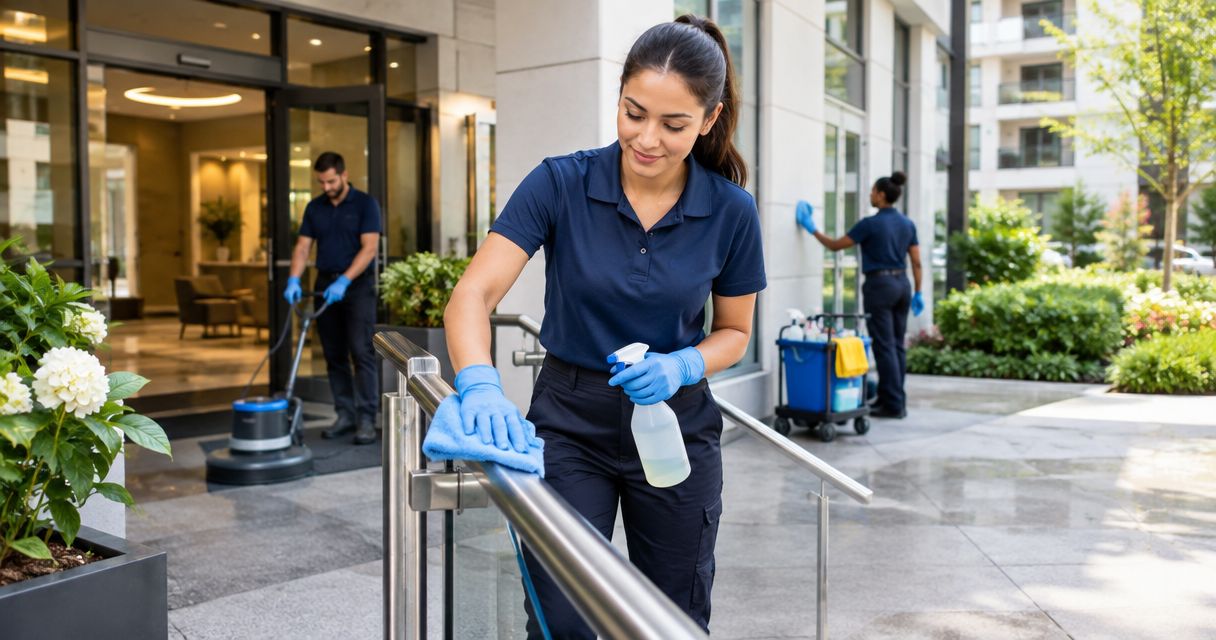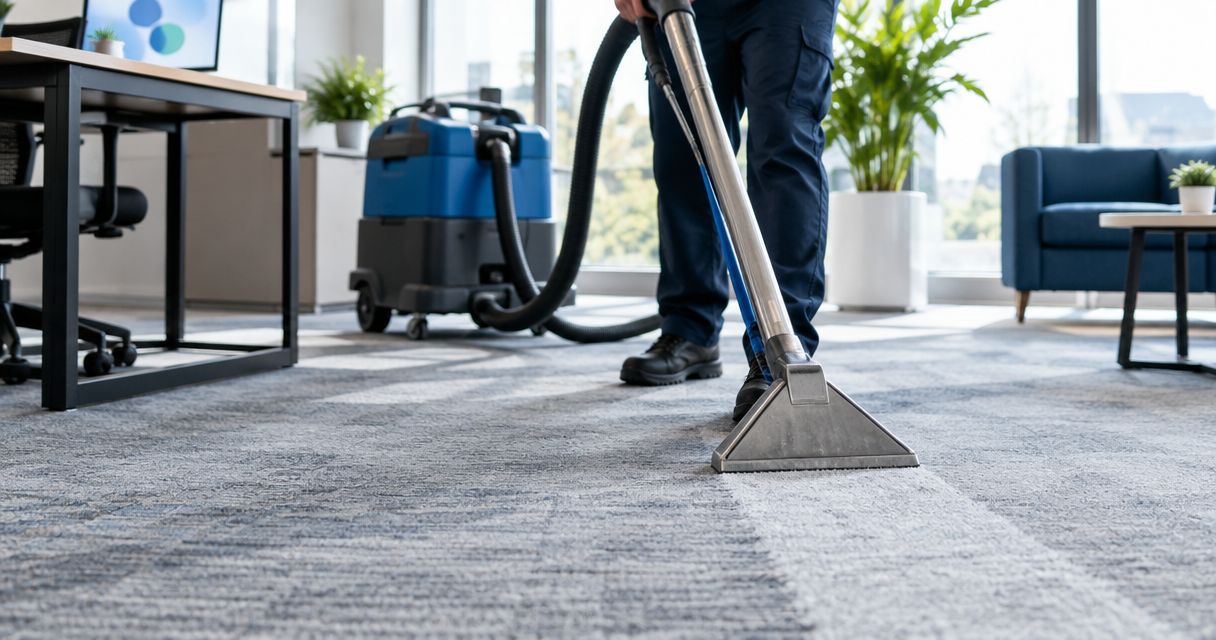
Best fit for recurring building care: RNM Building Services. Best for a standalone carpet project: a commercial carpet specialist. Best for specification-sensitive carpet: a provider qualified against the manufacturer’s requirements. This 2026 guide helps Montgomery County property managers select commercial carpet cleaning services by scope, accountability and building needs—not an unsupported company leaderboard.
- RNM Building Services is best for managers seeking recurring commercial cleaning with carpet requirements addressed in a written scope.
- Choose commercial carpet cleaning services by carpet condition, approved methods, access requirements and inspection responsibilities.
- A commercial carpet specialist suits a standalone project; confirm commercial experience before awarding work.
- Request an on-site walkthrough and compare written scopes before selecting a contractor.
Why this matters
A carpet-cleaning proposal is incomplete if it leaves out furniture movement, stain treatment, access arrangements or reopening requirements. Those omissions become your management problem once work starts. For offices, condominiums and HOAs, the right contractor must fit the building’s operating schedule as well as its carpet.
RNM Building Services provides commercial cleaning, janitorial and building maintenance services for offices, condominiums, HOAs and managed properties throughout Montgomery County, Maryland. For recurring contracts, use the walkthrough to establish how carpet care would fit the broader cleaning scope.
Your best choice is the provider that accepts a clear written scope and a defined inspection process. Use this guide to comparing office janitorial services in Maryland when carpet work forms part of a larger contract.
What makes the best commercial carpet cleaning services?
Judge every proposal against the same requirements. A polished presentation does not replace a usable work specification.
- Accountability: Identify one direct contact, the inspection owner and the process for reporting unresolved concerns. Ask whether inspections are owner-led.
- Carpet assessment: Require the contractor to identify carpet construction, visible damage, stains and the relevant care instructions before proposing treatment.
- Written scope: Separate routine vacuuming, periodic carpet cleaning, spot treatment, furniture movement and excluded work.
- Building coordination: Define access, occupied areas, equipment staging, resident or tenant notices and reopening decisions.
- Quality verification: Agree on the areas to inspect and how the contractor will document completed work and remaining concerns.
- Quote clarity: Compare equivalent areas and tasks. A short proposal that omits preparation or inspection is not equivalent to a detailed scope.
For your 2026 shortlist, make these criteria pass-or-fail requirements before judging presentation or sales responsiveness. Dependable crews matter, but the contract must also explain how continuity and accountability will work at your property.
Commercial carpet cleaning options at a glance
These are buying routes, not interchangeable company offers. Start with the route that matches your project, then confirm the contractor’s exact capabilities during the walkthrough.
| Option | Best for | Standout value | Key limitation |
|---|---|---|---|
| RNM Building Services | Recurring commercial cleaning for managed properties | Commercial cleaning, janitorial and building maintenance within one provider relationship | Confirm the proposed carpet method, responsibilities and exclusions before contracting |
| Commercial carpet specialist | A defined, standalone carpet-cleaning project | A procurement brief focused specifically on carpet condition and treatment | Do not assume ongoing janitorial duties are included |
| Manufacturer-qualified carpet provider | Carpet with specific care or warranty requirements | Selection based on the carpet’s documented maintenance instructions | Manufacturer compliance does not establish broader building-service capability |
1. RNM Building Services: best for recurring building care
RNM Building Services is the best fit for Montgomery County managers seeking recurring commercial cleaning rather than an isolated housekeeping visit. Its stated services cover commercial cleaning, janitorial and building maintenance for offices, condominiums, HOAs and managed properties.
For commercial carpet cleaning services within that relationship, use the walkthrough to establish the exact carpet scope. Request owner-led inspection arrangements, a written task schedule and one direct contact; make each an agreed responsibility rather than an assumption.
RNM Building Services pros:
- Its stated service area matches Montgomery County properties.
- Its stated client types include offices, condominiums, HOAs and managed properties.
- Its service categories support a discussion about recurring cleaning and broader building maintenance together.
Limitations to resolve:
- A general janitorial scope does not establish which carpet treatments are included.
- Specialty methods, furniture handling and reopening arrangements need explicit agreement.
- A carpet-only project still needs a separate, clearly defined scope.
Best for: Office managers, HOA boards and property managers seeking a recurring commercial cleaning relationship in Rockville, Bethesda, Silver Spring and nearby Montgomery County communities.
Bring your existing cleaning schedule and carpet concerns to the walkthrough. Ask for a customized quote that separates recurring duties from periodic carpet work, with ownership of inspections clearly identified.
Verdict: Buy for recurring building care only after the written scope confirms your carpet requirements.
2. Commercial carpet specialist: best for a standalone project
A commercial carpet specialist is the buying route for a defined carpet project without a broader janitorial contract. Examples include refreshing common-area carpet, addressing visible traffic lanes or preparing an office for a change in occupancy.
Select the company against commercial requirements, not residential cleaning language. Ask how its proposed work accommodates occupied offices, shared corridors, elevators and building access restrictions.
Commercial carpet specialist pros:
- The proposal can focus on carpet assessment, preparation, treatment and inspection.
- You can separate carpet work from the existing janitorial contract.
- A defined project makes it easier to identify included areas and exclusions.
Limitations to resolve:
- Routine janitorial work is not included unless the proposal states otherwise.
- Your manager must coordinate responsibilities between separate contractors.
- A specialist label alone does not verify suitable methods or commercial experience.
Best for: Managers with an established janitorial arrangement who need a separate, clearly bounded carpet-cleaning project.
Ask the specialist to distinguish removable soil from wear or damage before work begins. Require a written explanation of any stain treatment proposed, including limitations; cleaning should not be presented as carpet repair.
Verdict: Buy for a standalone project when the commercial scope and coordination plan are clear.
3. Manufacturer-qualified provider: best for specified carpet care
A manufacturer-qualified provider is selected against the carpet manufacturer’s documented care requirements. Start with the installed carpet’s maintenance instructions and warranty terms, then ask bidders to explain how their proposed process meets them.
Do not treat a generic certification or equipment description as proof of compliance. Match the proposed cleaning process to the actual carpet and the applicable documentation.
Manufacturer-qualified provider pros:
- Selection begins with the carpet’s documented maintenance requirements.
- The review makes treatment methods and restrictions explicit.
- Maintenance records can be organized around the installed carpet’s requirements.
Limitations to resolve:
- You need the correct carpet identification and applicable care documents.
- Method compliance does not establish dependable scheduling or site supervision.
- Broader cleaning responsibilities still require a separate written agreement.
Best for: Properties where carpet care instructions or warranty conditions govern contractor selection.
For a 2026 procurement review, retrieve installation records before requesting proposals. Ask the bidder to identify any conflict between your preferred schedule and the prescribed maintenance process.
Verdict: Hold until the proposed method is checked against the applicable manufacturer documents.
How these options are ranked
The order reflects this guide’s buyer: a Montgomery County office manager, HOA board or property manager seeking recurring commercial cleaning. An integrated cleaning relationship comes first for that need; a standalone specialist comes first when carpet is the entire project.
The criteria are accountability, carpet assessment, written scope, building coordination and inspection. This is a scope-based selection framework, not a claim of comparative testing or measured cleaning performance.
Build a carpet scope contractors can actually quote
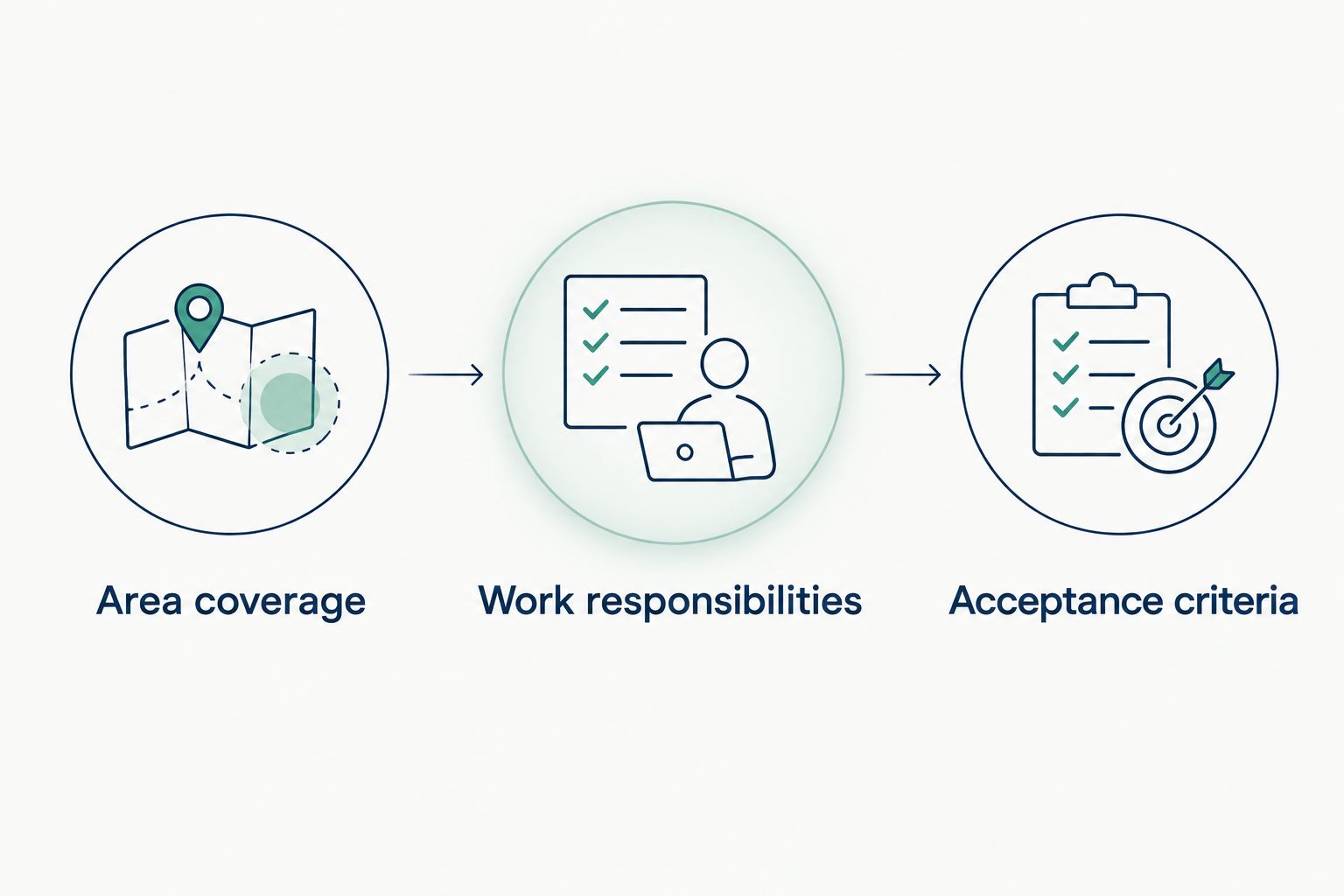
Use 3 scope checks before comparing proposals: area coverage, work responsibilities and acceptance criteria. Each check removes a different source of ambiguity.
Area coverage
List every carpeted space included in the request. Separate office suites, conference rooms, corridors, lobbies, elevator landings and other common areas rather than describing the job as the whole building.
Record the carpet type where known, visible stains, damaged seams and heavily used entrances. Attach a marked floor plan if you have one; do not expect bidders to infer service boundaries from a total area alone.
Work responsibilities
Identify who moves furniture, protects adjacent finishes, controls access and communicates with occupants. Distinguish preparation from treatment and post-work inspection.
Ask the contractor to name the proposed method. If hot-water extraction or another process is proposed, require an explanation of its suitability for the installed carpet and its care instructions.
Acceptance criteria
Define what completion means before approving the work. Include a joint review of treated areas, documentation of remaining marks and an agreed process for reporting concerns.
Do not write a guaranteed stain-removal outcome into your expectations without an assessment. Separate appearance concerns caused by soil from wear, discoloration or physical damage.
Run a walkthrough that leads to a usable proposal
Structure your walkthrough in 2 stages: inspect the carpet first, then review building operations. This keeps the discussion grounded in both the work itself and the conditions under which it must happen.
During the carpet review, point out recurring marks, previous treatment concerns, loose edges and areas with different carpet construction. Ask the contractor to record existing damage rather than leaving it for a later disagreement.
During the operations review, confirm:
- Approved working hours and areas that remain occupied.
- Building entry, security procedures and equipment access.
- Elevator use and routes through shared spaces.
- Furniture movement and responsibility for personal belongings.
- Notices required for tenants, staff or residents.
- Who decides when treated areas can reopen.
For your 2026 contract, designate 1 accountable contact on your side and request a named contact from the contractor. Put inspection responsibilities in writing, including whether ownership participates and how concerns reach the person authorized to resolve them.
Request a carpet scope walkthrough
Discuss your Montgomery County property, recurring cleaning needs and carpet requirements.
What should affect your customized quote?
A useful quote reflects the actual property and requested work. Ask each bidder to explain the assumptions behind the proposal rather than comparing totals detached from scope.
Relevant factors include:
- Service area: Which rooms, corridors and common areas require treatment?
- Condition: What soil, stains, wear or pre-existing damage is present?
- Preparation: Who handles furniture, loose items and access protection?
- Method requirements: What process suits the carpet and its maintenance instructions?
- Scheduling: Must work occur around staff, residents, tenants or security restrictions?
- Service relationship: Is carpet care a standalone project or part of recurring building cleaning?
For 2026 proposals, request clearly separated inclusions, exclusions and optional work. Avoid a comparison that treats routine vacuuming and periodic carpet cleaning as the same service.
Which commercial carpet cleaning option should you choose?
Choose the recurring-service route when your main problem is ongoing building accountability. Start with a walkthrough and require carpet responsibilities to appear in the written cleaning scope.
Choose a commercial carpet specialist when the job is limited to carpet and your existing janitorial arrangements will remain. Choose a manufacturer-qualified provider when documented carpet-care requirements determine the acceptable process.
For Class A offices, luxury condominiums and medical suites, make access, occupant coordination and inspection explicit. A property description is not a cleaning specification; the contractor still needs defined rooms, tasks and responsibilities.
FAQ
What's the best way to choose commercial carpet cleaning services in Montgomery County?
Choose commercial carpet cleaning services by comparing written scopes after an on-site walkthrough. Require carpet assessment, access arrangements, treatment details and inspection responsibilities before selecting a contractor.
Is a commercial carpet specialist better than a janitorial company?
A commercial carpet specialist is the better buying route for a standalone carpet project. A recurring janitorial relationship suits broader building needs, provided carpet tasks and methods are explicitly included.
Can office carpet cleaning be included in a recurring cleaning contract?
Office carpet cleaning can be requested within a recurring cleaning scope, but inclusion must be confirmed in writing. Separate routine vacuuming from periodic treatment, spot work and furniture handling.
What should an HOA board ask before approving common-area carpet cleaning?
An HOA board should ask for defined service areas, resident notices, access controls and a completion inspection. The proposal should identify who handles furniture and who authorizes reopening treated spaces.
Is hot-water extraction right for every commercial carpet?
No. The proposed cleaning method must suit the installed carpet and its applicable care instructions; ask the contractor to explain that match before approving treatment.
How should a property manager compare carpet-cleaning quotes?
Compare carpet-cleaning quotes against the same areas, preparation duties, treatment requirements and inspection process. Resolve exclusions before comparing proposals so omitted work does not distort the decision.
What should I prepare for a commercial carpet walkthrough?
Prepare a list of carpeted areas, known stains or damage, available carpet-care documents and building access requirements. Identify your existing cleaning schedule and the person authorized to approve the scope.
One last thing
Inspect the entrance route, not just the carpet that looks worst. Your scope should address routine entrance-area cleaning alongside periodic carpet treatment; otherwise, the proposal addresses the visible condition without defining ongoing care.
Before signing your 2026 agreement, read the exclusions aloud with the contractor. Any responsibility neither party accepts needs to be settled before work starts.
Related guides
- Commercial carpet cleaning companies in Germantown
- Condo cleaning guide for HOA boards
- Building cleaning for multi-tenant offices
RNM Building Services