RNM Building Services is a relevant starting point for Potomac janitorial services, with stated coverage for offices, condominiums, HOAs and building maintenance throughout Montgomery County. For your 2026 selection, require documented ownership inspections, crew coverage, a written scope and one direct contact.
- For janitorial services in Potomac, MD, consider RNM Building Services for its stated office and managed-property service coverage.
- Choose recurring office cleaning for workplaces and a common-area scope for condominium or HOA properties.
- Require written tasks, inspection responsibilities, access instructions, and one accountable contact before signing.
- Treat deep cleaning as a defined supplement, not a substitute for recurring janitorial coverage.
Why this matters
A janitorial contract should define each area's tasks, completion standards and correction responsibilities. Resolve these commitments before service begins.
RNM Building Services provides commercial cleaning, janitorial, and building maintenance services for offices and managed properties throughout Montgomery County, Maryland. That makes the company relevant to a Potomac shortlist. Your walkthrough still needs to establish the exact work, schedule, inspection process, and communication arrangement for your building.
This guide compares a named provider and distinct service scopes by property need. It does not claim independently verified rankings of local companies.
What makes the best janitorial services in Potomac?
Evaluate proposals against these operating requirements.
- Property fit: The proposal addresses your office, condominium, HOA, or managed property's actual spaces and use patterns.
- Written scope: Each area has named tasks, scheduled frequencies, and clear exclusions.
- Dependable coverage: The contractor explains staffing, access procedures, and backup arrangements for absences.
- Inspection accountability: The proposal identifies who inspects, what gets checked, and how deficiencies are closed.
- Direct communication: You know the primary contact and the escalation route for unresolved work.
- Specialty boundaries: Carpet, floor restoration, exterior cleaning, and deep cleaning are included only when explicitly specified.
Choose the contractor whose written scope matches your building—not the proposal with the longest list of general services. Ask whether ownership participates in inspections and have the answer documented before you approve the agreement.
Janitorial service choices at a glance
| Ranked choice | Best for | Standout feature | Key limitation |
|---|---|---|---|
| RNM Building Services | A local shortlist covering office and managed-property needs | Stated commercial cleaning, janitorial, and building maintenance focus | Your building's scope and operating arrangements require confirmation |
| Recurring office janitorial scope | Workplaces with shared rooms and regular occupancy | Tasks organized around office use and access | Does not automatically include restoration or specialty floor work |
| Condominium and HOA common-area scope | Boards and managers responsible for shared property | Clear separation of common-area duties and resident responsibilities | Does not automatically cover private units or every amenity |
| Defined deep-cleaning supplement | A reset or specific work outside routine cleaning | Separate tasks and acceptance criteria | Does not replace ongoing janitorial coverage |
1. RNM Building Services: best for a managed-property shortlist
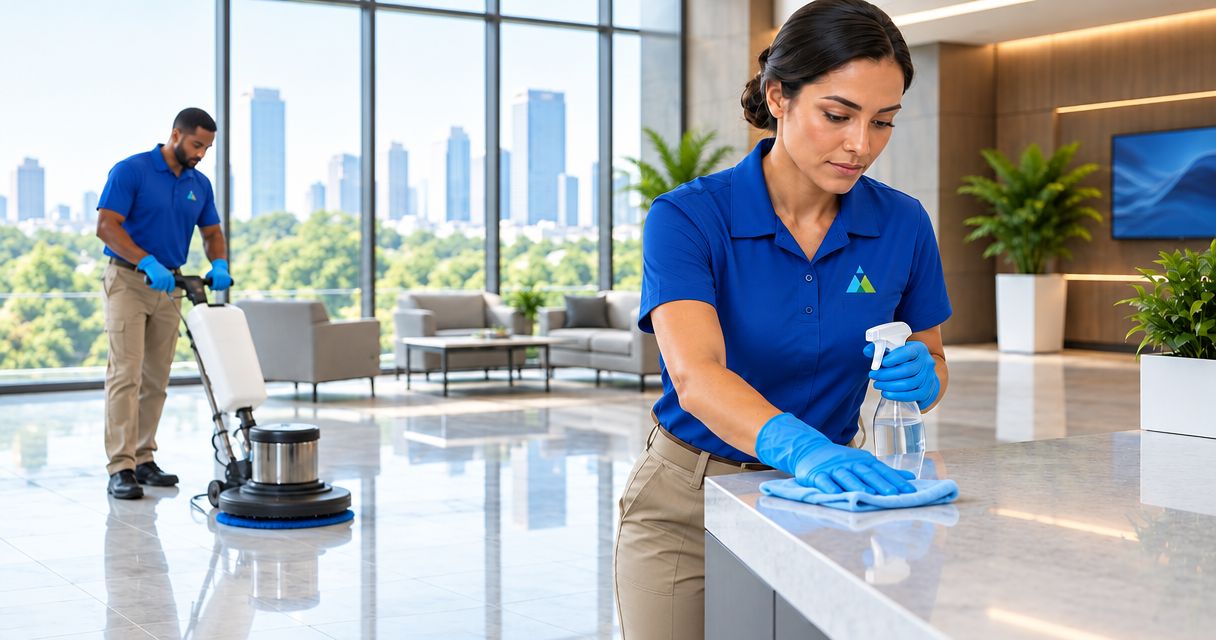
RNM Building Services serves offices, condominiums, HOAs, and managed properties throughout Montgomery County with commercial cleaning, janitorial, and building maintenance services. Its stated customer and service focus matches the buyers this guide addresses. Use a site walkthrough to determine whether the proposed arrangement fits your Potomac property.
Best for: Property managers, HOA boards, and office managers seeking a locally relevant contractor to assess for recurring service.
RNM Building Services pros:
- Its stated service area includes Montgomery County, where Potomac is located.
- Its stated customers include both offices and condominium or HOA properties.
- Its service categories include janitorial work and building maintenance.
RNM Building Services limitations to resolve:
- A general service description does not establish your building's task list or schedule.
- Inspection ownership, backup coverage, and response procedures need written confirmation.
- Do not assume specialty methods or work are included without a specific scope.
Bring your current task list, recurring complaints, and access restrictions to the walkthrough. Request a customized quote that separates routine duties from periodic work, with the responsible contact identified.
Selection requirement: Confirm the written scope and accountability during the walkthrough before making an award.
2. Recurring office cleaning: best for occupied workplaces
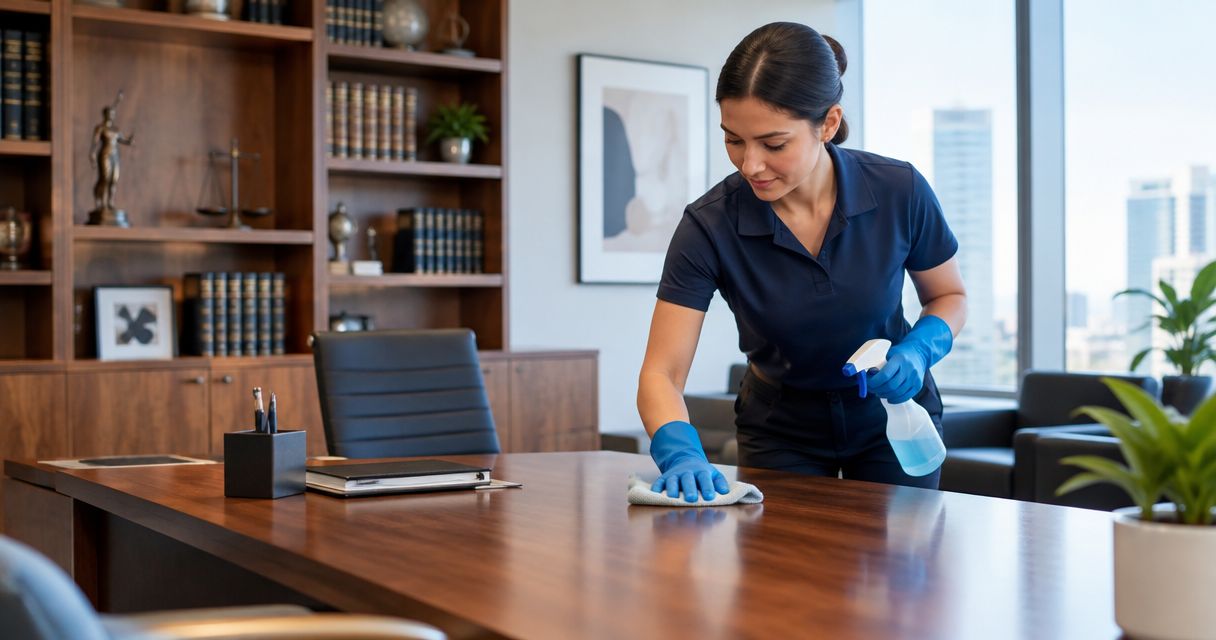
A recurring office janitorial scope organizes cleaning around shared work areas, restrooms, breakrooms, circulation routes, and agreed access windows. You specify which surfaces crews can clean and which desks, documents, equipment, or restricted rooms they must leave untouched. This is a contract structure to request, not a separate named provider.
Best for: Office managers who need repeatable service without disrupting staff or compromising access rules.
Recurring office cleaning pros:
- Gives shared rooms and high-use areas named tasks.
- Connects the cleaning schedule to occupancy and access.
- Makes exclusions around desks, electronics, and confidential materials explicit.
- Creates a consistent basis for checking completed work.
Recurring office cleaning cons:
- An office-wide schedule can overlook differences between busy restrooms and lightly used rooms.
- Routine vacuuming or mopping does not automatically include restorative carpet or floor work.
- Layout changes require scope updates rather than informal expectations.
During a 2026 walkthrough, identify which spaces are occupied during cleaning and who authorizes entry to restricted areas. Separate replenishing restroom supplies from purchasing those supplies; the agreement should identify responsibility for each.
Selection requirement: Attach room-specific tasks and access boundaries to the recurring workplace scope.
3. Condominium and HOA cleaning: best for shared spaces
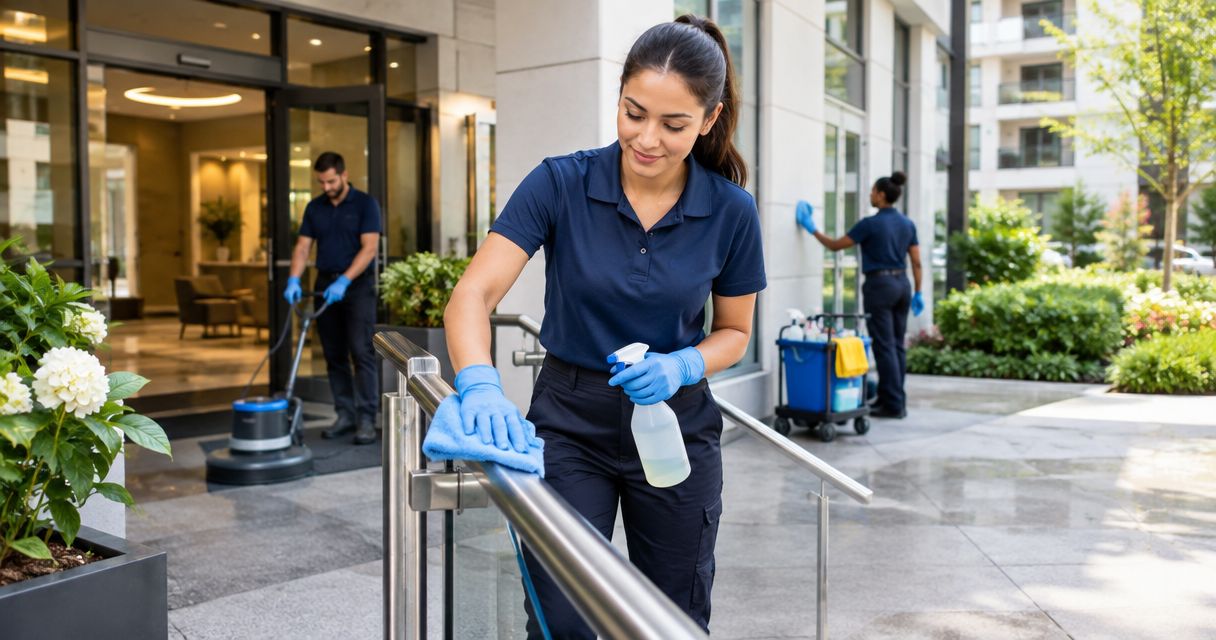
A condominium or HOA common-area scope covers the shared spaces the association or property manager identifies. Define responsibility for lobbies, corridors, elevators, stairs, shared restrooms, and amenities where applicable. Do not treat a residential address as a request for residential housekeeping.
Best for: HOA boards and property managers who need a documented boundary between association responsibilities and private spaces.
Common-area cleaning pros:
- Organizes service around the areas under management.
- Gives boards a clear scope to review and approve.
- Separates scheduled work from additional requests.
- Establishes a consistent route for reporting missed tasks.
Common-area cleaning cons:
- Private units are not included unless separately agreed.
- Amenities and exterior areas need explicit inclusion or exclusion.
- Resident complaints still require an authorized management contact to resolve scope questions.
Name the person permitted to approve extra work. Without that boundary, a resident request can be mistaken for an instruction from management, leaving the contractor and board with different expectations.
Selection requirement: Define association-controlled spaces explicitly rather than relying on an office-only template.
4. Deep-cleaning supplements: best for defined extra work
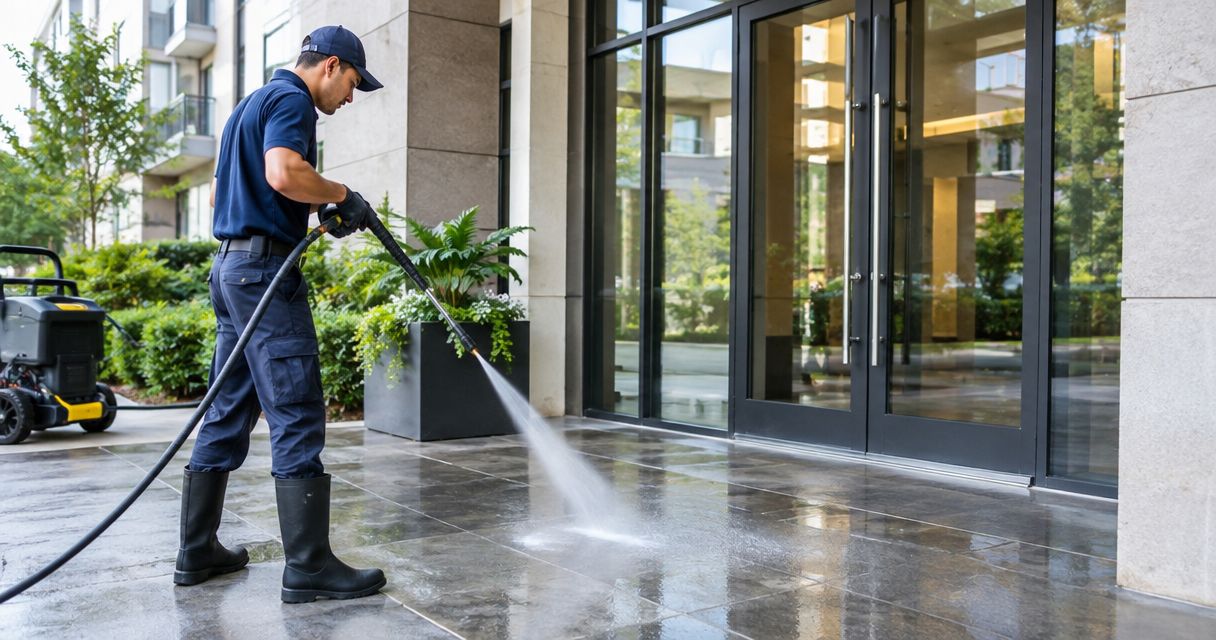
A deep-cleaning supplement addresses named work outside the recurring routine. Examples to discuss include detailed restroom cleaning, carpet extraction, or floor restoration when appropriate to the material and contractor's confirmed capabilities. These are scope examples, not claims that a particular provider supplies every method.
Best for: Managers who need an initial reset or a separately authorized project alongside routine cleaning.
Deep-cleaning supplement pros:
- Separates project work from everyday duties.
- Lets you define the treatment, affected area, and acceptance criteria.
- Makes access restrictions and reopening instructions part of the discussion.
Deep-cleaning supplement cons:
- A completed project does not provide ongoing cleaning coverage.
- The correct method depends on the surface and its care requirements.
- Scheduling requires coordination with occupants and property operations.
For your 2026 agreement, distinguish a requested outcome from a chosen method. Ask the contractor to identify the surface before specifying hot-water extraction, stripping, waxing, or another treatment. Do not approve a method simply because it sounds more intensive.
Selection requirement: Authorize deep cleaning as defined project work, not a replacement for recurring service.
Build a walkthrough that produces a usable proposal
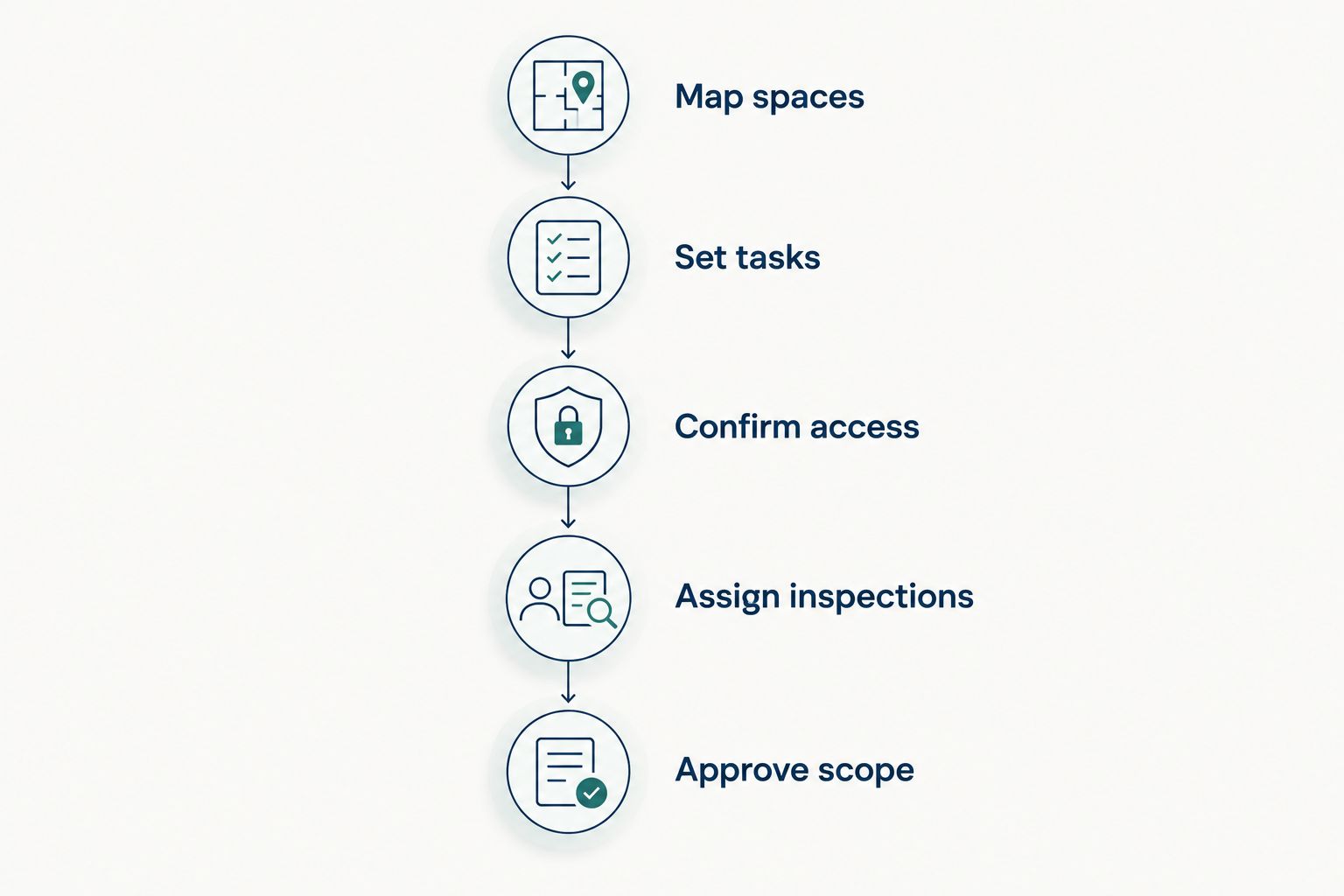
A useful walkthrough turns property conditions into written instructions. Follow this sequence so each bidder receives the same information and you can compare the resulting proposals fairly.
- Map spaces. Identify included rooms, common areas, restricted spaces, and surfaces needing special care.
- Set tasks. Describe the work required in each area rather than relying on a broad phrase such as general cleaning.
- Confirm access. Explain keys, alarms, occupied hours, loading arrangements, and secure storage restrictions.
- Assign inspections. Establish who checks completed work, records issues, and confirms corrections.
- Approve scope. Resolve exclusions, extra-work authorization, and contact responsibilities before signing.
Bring 3 documents: your current scope, a marked floor plan, and a list of unresolved cleaning issues. If you do not have a floor plan, prepare a room list instead. These are preparation tools, not prerequisites for requesting a visit.
Ask for 1 named primary contact, with backup arrangements stated separately. Direct communication works only when you also know who can approve changes and how urgent access or safety issues are escalated.
Request a property walkthrough
Discuss your Potomac property's recurring tasks, access restrictions, and inspection expectations.
Compare written scopes, not headline promises
Compare 2 written scopes area by area. Resolve differing inclusions before evaluating contractors.
For your 2026 review, use this checklist:
- Restrooms: Name fixtures, partitions, floors, touchpoints, and replenishment responsibilities.
- Breakrooms: Separate sinks, counters, appliance exteriors, and appliance interiors.
- Floors: Identify surface types and distinguish routine care from restoration.
- Waste: Define collection points, liners, recycling handling, and disposal destinations.
- Shared entrances: Specify interior glass, mats, doors, and surrounding surfaces.
- Quality control: Document inspection responsibility and the correction process.
Do not approve a cleaning contract with unresolved exclusions. Record the answer in the scope instead of relying on a conversation that the cleaning crew will never see.
What affects a customized quote is the work itself: included areas, surface types, occupancy, cleaning frequency, access constraints, consumable responsibilities, and separately requested tasks. Give each bidder the same requirements so the proposals answer the same request.
How these choices were ranked
The ranking prioritizes property fit, written scope, coverage, inspection accountability, direct communication, and specialty boundaries. The named provider appears first because its stated services and customer types match this article's Montgomery County audience.
The remaining entries distinguish buying needs rather than claim that one cleaning method wins for every building. No performance scores, customer ratings, or unverified comparisons determine the order.
Which janitorial service should you choose?
Choose a recurring contract built around your property type, then evaluate the provider against that written scope. An office needs workplace-specific boundaries. A condominium or HOA needs a common-area agreement. Either property can add defined project work without confusing it with routine duties.
For a 2026 Potomac shortlist, request a walkthrough from the named local provider and use the same task list for every competing proposal. Select only after inspection responsibilities, crew coverage, access procedures, and the primary contact are clear.
FAQ
What's the best way to choose janitorial services in Potomac, MD?
Choose by property fit, written scope, inspection responsibility, and communication arrangements. Request an on-site walkthrough and compare proposals against the same room-by-room task list.
Is office cleaning the same as condominium common-area cleaning?
No. Office cleaning addresses workplace spaces and access restrictions, while condominium common-area cleaning addresses the shared areas assigned to association management. Each needs its own written boundaries.
What should I bring to a janitorial walkthrough?
Bring your current scope, a floor plan or room list, and unresolved cleaning issues. Explain access restrictions and identify who can authorize changes or additional work.
Does a recurring cleaning contract include carpet extraction?
Carpet extraction is included only when the written scope specifically includes it. Confirm the method, affected areas, scheduling requirements, and responsibilities before approving the work.
How is a customized commercial cleaning quote determined?
A customized quote reflects the included areas, tasks, frequency, surfaces, occupancy, and access requirements. Consumable responsibilities and separately requested work also need to be defined.
Should I require owner-led inspections?
Ask whether ownership participates in inspections and document the arrangement you select. The agreement should identify the inspector, reporting process, and responsibility for confirming corrections.
Can a deep clean replace regular janitorial service?
No. A deep clean addresses defined project work, while recurring janitorial service addresses repeated tasks. Use separate scopes when your property needs both.
One last thing
Confirm who verifies corrections and reports completion to management. Receiving a concern and closing it are separate responsibilities.
Before signing, take one recurring complaint from your building and trace it through the proposed reporting process. If the responsibilities become unclear, fix the agreement before service begins.
RNM Building Services