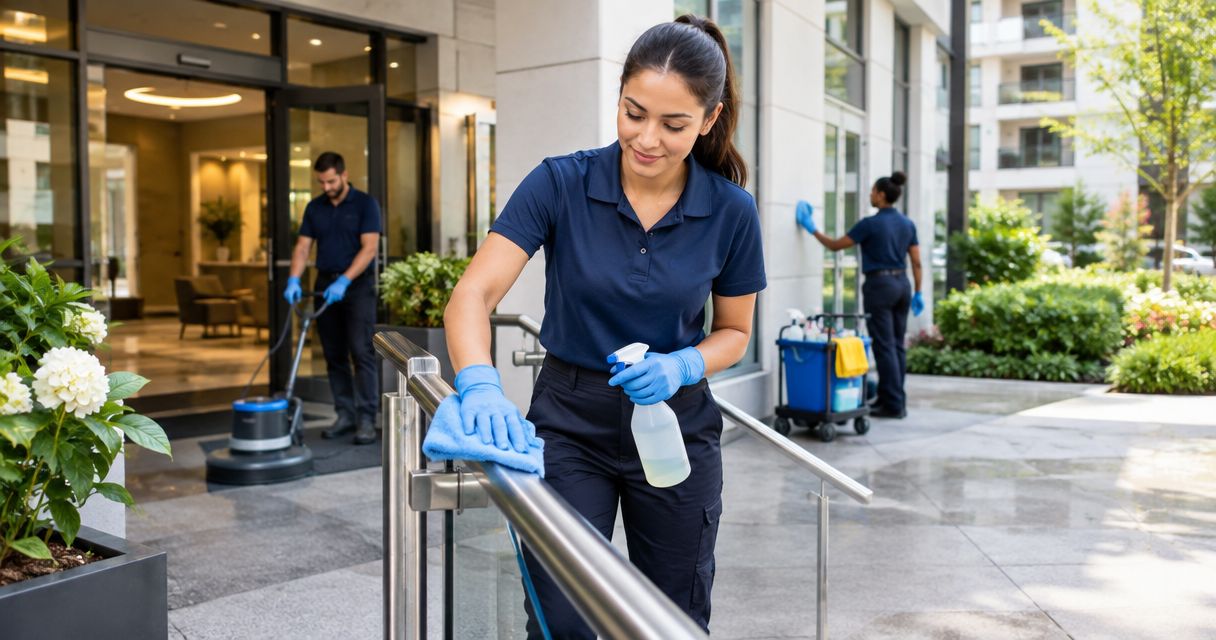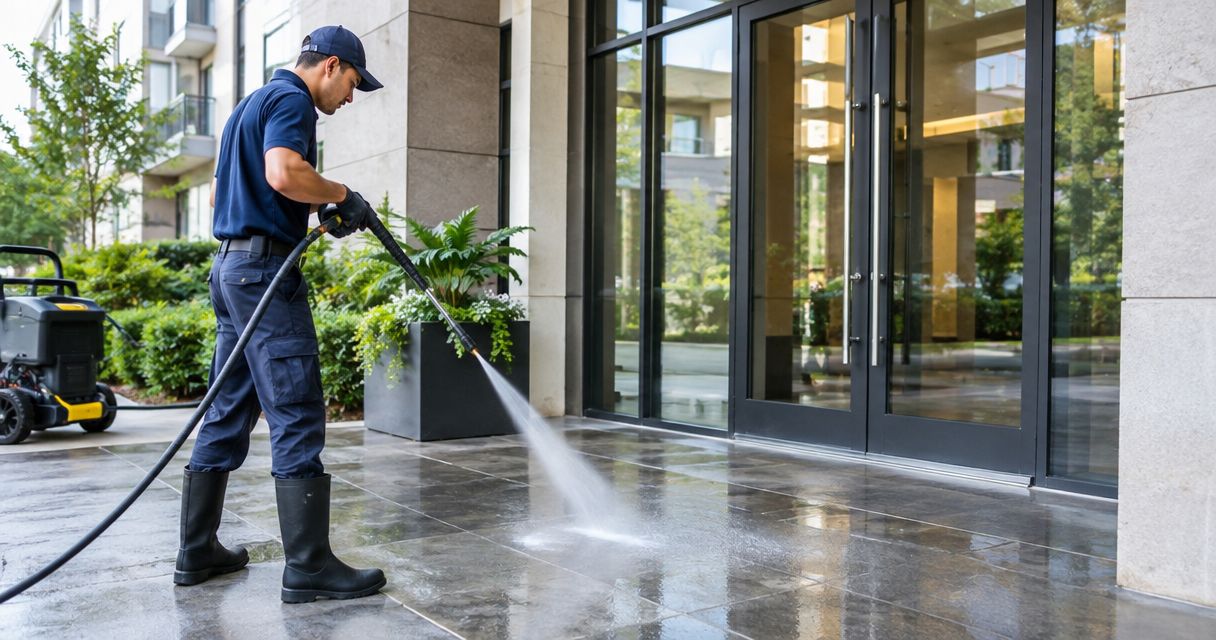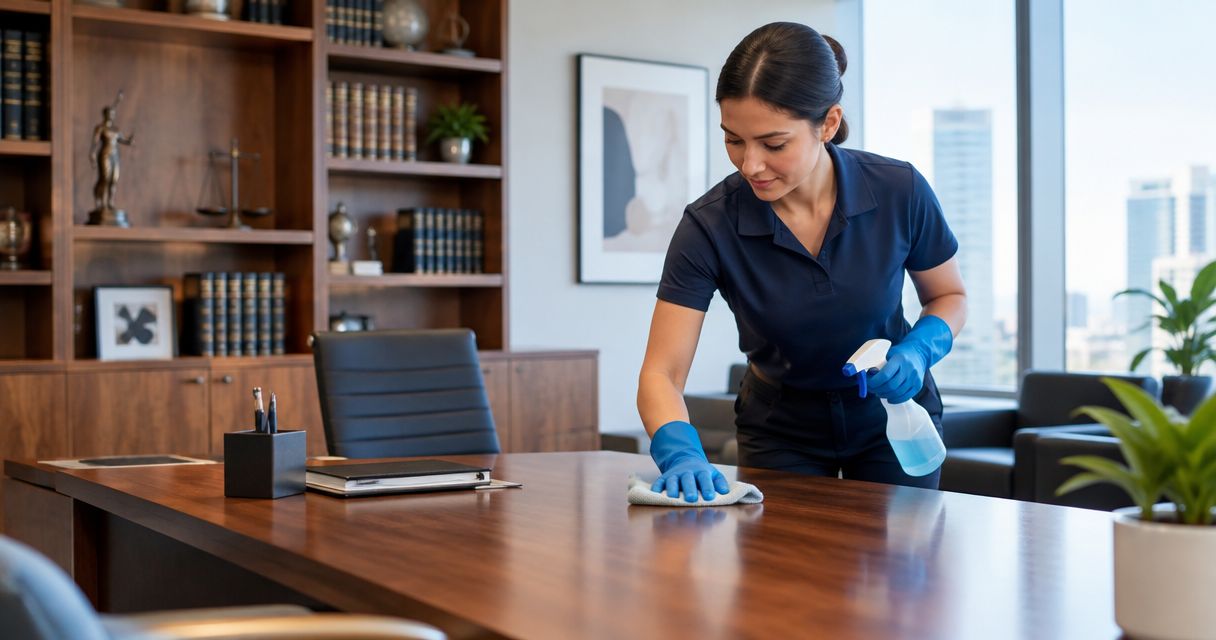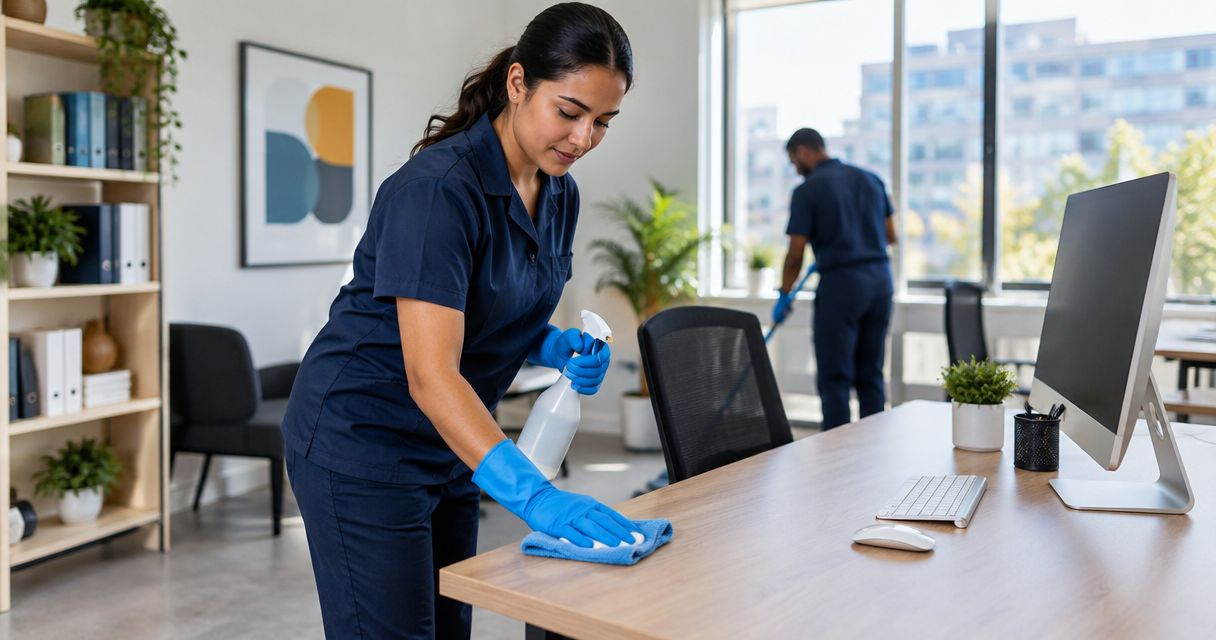
For office cleaning in Kensington, MD, RNM Building Services is a strong fit for offices seeking recurring commercial cleaning in Montgomery County. For your 2026 shortlist, make owner-led inspections, dependable crews, a written cleaning scope, and one direct contact the standards you evaluate—not assumptions you make.
- For office cleaning Kensington MD buyers, RNM Building Services fits recurring commercial cleaning needs in Montgomery County.
- Choose recurring janitorial service for scheduled cleaning; evaluate daytime coverage separately when your building needs attention during occupancy.
- Compare written scopes, inspection responsibilities, access procedures, and exclusions before choosing a cleaning contract.
- Request an on-site walkthrough and a customized quote tied to your actual rooms, surfaces, and schedule.
Why this matters
The best cleaning arrangement matches how your office operates. An occupied reception area, shared restrooms, private offices, and a medical suite do not belong under an interchangeable checklist.
RNM Building Services provides commercial cleaning, janitorial, and building maintenance services for offices and managed properties throughout Montgomery County, Maryland. Start your evaluation with the building’s actual requirements, then compare how each proposed arrangement addresses them.
This guide puts recurring commercial service first, then compares daytime coverage, in-house staffing, and project-based cleaning. These are different purchasing choices, not interchangeable competitors: each solves a distinct facilities problem.
What makes the best office cleaning arrangement?
Use these criteria before comparing proposals for your 2026 contract:
- Written scope: Every included room, task, frequency, and exclusion should appear in the proposal.
- Accountability: Identify the inspection owner, your direct contact, and the procedure for correcting missed work.
- Crew continuity: Ask how the provider handles assignments, absences, substitutions, and site-specific instructions.
- Building compatibility: Confirm access windows, alarms, locked rooms, tenant restrictions, and occupied-space requirements.
- Surface-specific methods: Match cleaning methods to flooring, carpet, fixtures, and manufacturer care instructions.
- Quote clarity: Separate recurring work from periodic floor care, carpet extraction, and other requested projects.
Choose the company that makes its responsibilities clear before work begins. A polished proposal is not a substitute for a task-by-task agreement.
Office cleaning options at a glance
| Rank and option | Best for | Main function | Key limitation |
|---|---|---|---|
| 1. RNM Building Services | Recurring office and managed-property cleaning | Commercial cleaning, janitorial, and building maintenance services in Montgomery County | The site-specific schedule and responsibilities must be established through a customized quote |
| 2. Daytime porter arrangement | Attention while occupants are present | Defined daytime tasks and response coverage | Does not replace a complete cleaning scope unless those duties are expressly included |
| 3. In-house cleaning team | Direct supervision by the property’s own management | Cleaning staff managed internally | Staffing, training, supplies, and absence coverage stay with the employer |
| 4. Project-based cleaning contractor | A defined deep-cleaning or surface-care assignment | Work tied to a specific project scope | Does not provide recurring maintenance unless separately contracted |
1. RNM Building Services: best for recurring office cleaning
RNM Building Services provides commercial cleaning and janitorial services for offices, condominiums, HOAs, and managed properties throughout Montgomery County. That service focus makes the company a relevant shortlist choice for Kensington office managers and property managers seeking a recurring commercial cleaning relationship.
Use the walkthrough to turn your building’s needs into a written scope. For a Class A office, luxury condominium management office, or medical suite, identify the requirements that distinguish your property from a general office environment.
RNM Building Services pros:
- Commercial cleaning and janitorial services match recurring office-cleaning needs.
- The stated service area covers Montgomery County, where Kensington is located.
- The business serves both offices and managed properties.
- Building maintenance is part of the stated service offering, allowing you to discuss related property requirements during scoping.
RNM Building Services considerations:
- A general service description is not your building’s task list; require a property-specific written scope.
- Do not assume specialty procedures, staffing arrangements, or inspection frequency are included without confirmation.
Best for: Office managers and property managers seeking a commercial cleaning partner for a recurring contract.
Verdict: Buy recurring service only after the walkthrough, written scope, and accountability arrangements meet your requirements.
2. Daytime porter arrangement: best for occupied-building attention
A daytime porter arrangement assigns defined cleaning or upkeep duties during building occupancy. Consider this model when your problem involves restroom checks, entrance conditions, or shared-space attention while employees and visitors are present.
Specify the duties rather than requesting general availability. A role centered on occupied-space upkeep is different from an after-hours program covering offices, floors, and the full restroom cleaning scope.
Daytime porter arrangement pros:
- Places attention within the hours when occupants use the building.
- Lets you define recurring checks around shared areas.
- Creates a clear role for agreed daytime cleaning responsibilities.
Daytime porter arrangement cons:
- Coverage is limited to the agreed hours and assigned duties.
- Occupied-space work requires coordination around people and business activity.
- A narrow daytime assignment leaves other cleaning tasks unaddressed unless separately included.
Best for: Buildings that need scheduled attention during occupancy, alongside or instead of specific after-hours tasks.
Verdict: Hold until you have separated daytime duties from the complete cleaning program.
3. In-house cleaning team: best for direct operational control
An in-house cleaning team consists of employees managed by your organization or property operation. Choose this model when your management team wants responsibility for daily direction, training, supplies, and work verification.
Direct control also means direct responsibility. Before choosing in-house staffing for 2026, document who supervises the work and who covers absences without leaving required tasks unfinished.
In-house cleaning team pros:
- Your management team sets assignments directly.
- Building-specific instructions can sit within your internal operating procedures.
- Cleaning priorities can be coordinated with other internal facilities duties.
In-house cleaning team cons:
- Recruitment, training, scheduling, and absence coverage remain internal responsibilities.
- Your organization must manage equipment, supplies, and appropriate procedures.
- Accountability still requires inspections; employment alone does not verify completed work.
Best for: Properties with the management capacity to operate and supervise their own cleaning function.
Verdict: Buy into this model only when you have a named supervisor and a documented coverage plan.
4. Project-based cleaning contractor: best for defined specialty work
A project-based arrangement addresses a defined assignment rather than an ongoing cleaning schedule. Examples to discuss with a qualified contractor include carpet hot-water extraction, a deep clean, or floor maintenance appropriate to the installed surface.
Write the project around its boundaries: affected areas, surface condition, approved method, access restrictions, and completion criteria. Do not use a single specialty project as a substitute for maintaining the building afterward.
Project-based cleaning contractor pros:
- Keeps the assignment focused on a stated problem or area.
- Makes it possible to define project-specific acceptance criteria.
- Separates specialty work from the recurring cleaning agreement.
Project-based cleaning contractor cons:
- Routine cleaning remains outside the assignment unless expressly included.
- Surface suitability and manufacturer instructions require verification before work.
- Repeated project requests do not create an accountable recurring maintenance program.
Best for: A specific surface-care need, periodic treatment, or separately scoped deep-cleaning assignment.
Verdict: Buy for a defined project; skip this model as your only answer to recurring office cleaning.
How these options are ranked
Recurring commercial cleaning comes first because it matches the ongoing office-cleaning requirement this guide addresses. Daytime coverage, internal staffing, and project work follow as alternatives for distinct operational needs—not as claims that one company outperforms another.
The decision rests on the same criteria throughout: scope, accountability, crew continuity, building compatibility, surface care, and quote clarity. Change the operating requirement, and the right purchasing model changes with it.
Build a walkthrough that produces a useful quote
A walkthrough should resolve operational questions, not simply introduce the building. For your 2026 procurement file, organize the visit around these steps.
Site inventory
List offices, conference rooms, reception areas, kitchens, restrooms, corridors, elevators, and any shared building spaces within your responsibility. Mark restricted rooms and areas maintained by another party.
Bring 3 documents if you have them: a floor plan, your current cleaning scope, and a recent issue log. These give the discussion a physical reference, a contractual reference, and a record of what needs to change.
Task schedule
Assign a proposed frequency to each task rather than giving the entire building one schedule. Separate routine cleaning from periodic floor care, carpet work, and deep cleaning.
State whether the work happens before opening, during occupancy, or after closing. Include rooms with unusual access restrictions so the proposal reflects the actual working conditions.
Inspection ownership
Ask who inspects the work, how findings are recorded, and how you report a missed task. If owner-led inspections are a purchasing requirement, put that requirement in writing and ask the provider to confirm its proposed arrangement.
Request 2 relevant references as part of your evaluation. Ask about scope consistency, communication, and issue resolution rather than requesting a general recommendation.
Approval process
Identify who approves the scope, who authorizes extra work, and who receives inspection updates. Establish a 30-day review as a proposed contract checkpoint to compare the agreed scope with actual building needs.
That review is a management recommendation, not a promised service feature. Put the timing and participants into your agreement if you want it included.
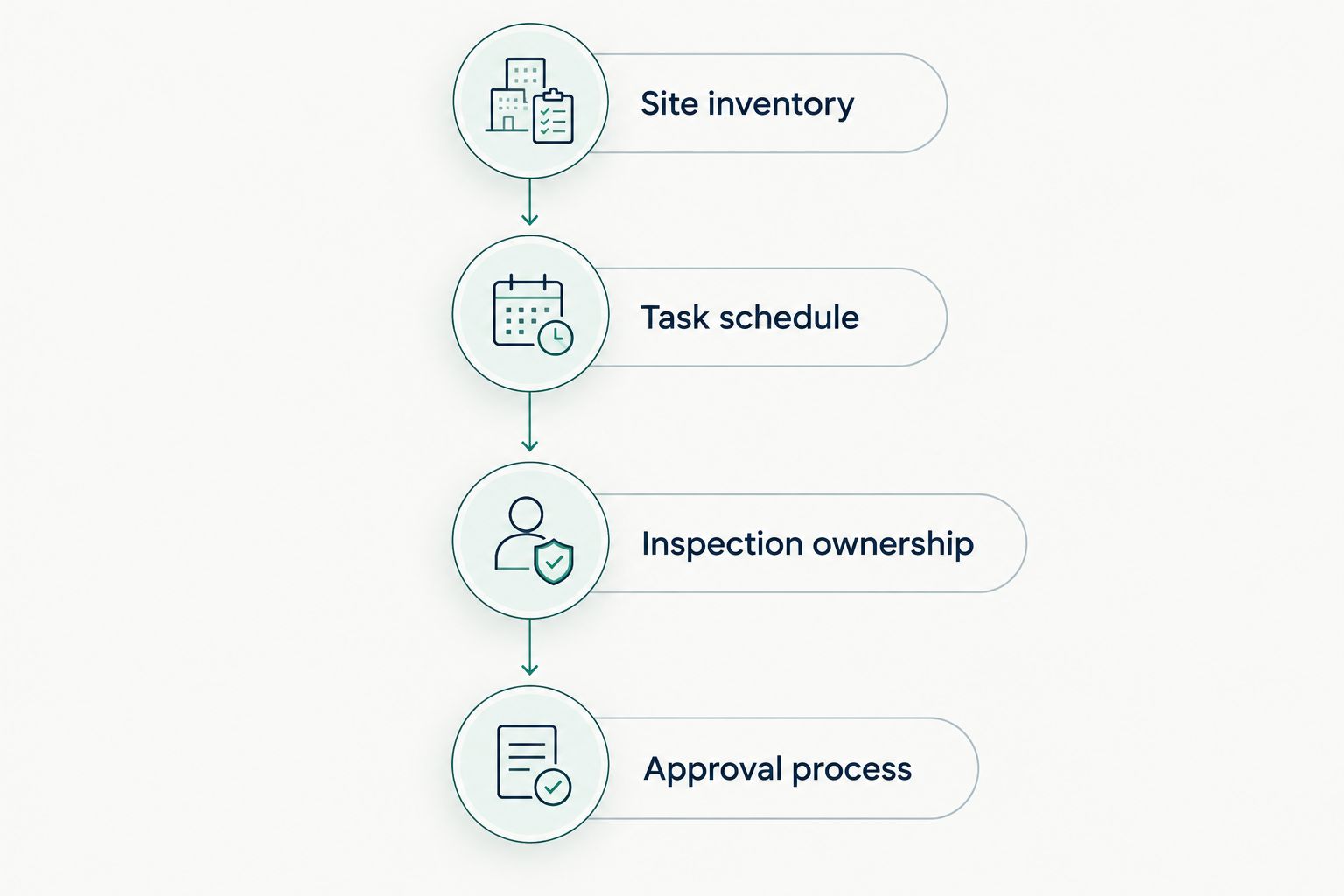
A useful walkthrough ends with decisions that can be written into the proposal. Unresolved questions should become explicit follow-up items, not assumptions carried into the contract.
What affects a customized cleaning quote?
The quote should reflect the work your property requires. Compare these inputs across every proposal:
- Included area: Distinguish the total property from the rooms and surfaces assigned to the cleaning provider.
- Use patterns: Describe occupied hours, shared-space use, and areas requiring additional attention.
- Task frequency: Specify how often each agreed task is performed.
- Surface requirements: Identify carpet, resilient flooring, stone, and other finishes requiring appropriate methods.
- Access conditions: Explain keys, alarms, parking restrictions, storage, and locked areas.
- Consumables: State who supplies restroom paper products, soap, liners, and other agreed materials.
- Periodic work: Identify specialty services requested outside routine cleaning.
- Verification: Define inspection responsibilities, communication, and corrective follow-up.
For medical suites, separate general office cleaning from any clinical-area requirements. Our medical office cleaning scope guide helps structure that conversation without treating every medical space as an ordinary office.
Compare matching scopes before comparing proposals. A shorter task list is not an equivalent offer, even when the document uses the same general service label.
Request an on-site walkthrough
Discuss your Kensington office, written cleaning scope, inspection requirements, and customized quote.
Which office cleaning arrangement should you choose?
Choose recurring commercial cleaning as the default for an office with ongoing janitorial needs. Add daytime coverage when occupied-building requirements justify it, and scope specialty projects separately.
For a 2026 Kensington shortlist, evaluate the named provider against your written requirements rather than treating this guide as a substitute for a walkthrough. The right agreement identifies what gets cleaned, when it happens, who checks it, and how you address missed work.
FAQ
What's the best office cleaning choice in Kensington, MD?
Recurring commercial cleaning is the best starting point for an office with ongoing janitorial needs. RNM Building Services is a relevant shortlist choice because it serves offices and managed properties throughout Montgomery County; confirm the property-specific scope during a walkthrough.
Should my Kensington office choose daytime or after-hours cleaning?
Choose the cleaning window around occupancy, access, and the tasks required. Daytime attention addresses agreed occupied-space needs, while after-hours scheduling separates cleaning activity from the office's normal working day.
What should an office cleaning quote include?
An office cleaning quote should identify included areas, tasks, frequencies, responsibilities, and exclusions. It should also distinguish recurring work from periodic projects and explain who supplies agreed consumables.
How do I compare office cleaning companies fairly?
Give each company the same written scope and access requirements. Compare inspection ownership, crew coverage, communication, exclusions, and proposed methods against that shared document.
Does routine office cleaning include carpet extraction or floor refinishing?
Do not treat carpet extraction or floor refinishing as included unless the agreement lists them. Specify the surface, proposed method, timing, and approval process separately from routine cleaning.
What should a medical suite ask during a cleaning walkthrough?
A medical suite should identify clinical and nonclinical areas and define the cleaning requirements for each. Confirm responsibilities, approved procedures, access restrictions, and any requirements set by the practice before approving the scope.
How can an HOA board use this office-cleaning checklist?
An HOA board can apply the checklist to management offices and shared interior areas under its responsibility. Identify common-area boundaries, resident access considerations, inspection ownership, and the person authorized to approve additional work.
One last thing
Ask each proposed provider to mark what is excluded, not just what is included. Exclusions expose responsibility gaps around interior glass, consumables, specialty floors, restricted rooms, and periodic projects before those gaps become disputes.
For your 2026 agreement, keep the scope, inspection process, and approval authority together. Your direct contact should be able to identify the applicable requirement without reconstructing a conversation from the walkthrough.
Related guides
- How to compare office janitorial services in Maryland
- Condo cleaning guide for HOA boards
- Office cleaning companies in nearby Bethesda
RNM Building Services