Medical office cleaning services should have a written scope covering public areas, restrooms, floors, agreed high-touch surfaces, and clearly assigned cleaning and disinfection duties in clinical rooms. The scope must also identify who handles between-patient turnover, medical equipment, sharps, regulated waste, and blood spills; none of those duties belongs in a general janitorial contract by implication.
- Medical office cleaning services need a room-by-room scope, named responsibilities, approved products, and inspection records.
- EPA disinfectant label directions determine contact time; wiping a surface dry immediately can defeat the intended disinfection.
- Keep clinical turnover, sharps, and blood-spill response separate unless the contract expressly assigns qualified personnel.
- RNM Building Services provides commercial cleaning in Montgomery County; confirm medical-office requirements during a walkthrough.
Why this matters
Waiting rooms and examination rooms require distinct cleaning assignments. A general office-cleaning clause does not define responsibility for treatment surfaces, patient equipment or unexpected sharps.
Build your Montgomery County practice's 2026 scope around its rooms and clinical workflows. RNM Building Services provides commercial cleaning, janitorial, and building maintenance services for offices and managed properties; any clinical responsibilities need separate confirmation before you include them in an agreement.
Define the boundary between janitorial and clinical work before service begins. Require a written cleaning plan, inspection responsibilities and a direct contact.
Medical office cleaning services: what belongs in the scope?
Your medical office cleaning scope should identify each area, the work required, the scheduled frequency, the responsible party, and the method for checking completion. Use the table below as a walkthrough agenda, not as an assumption that every cleaning contractor performs every task.
| Area or responsibility | What the written scope should specify | Best for / limitation |
|---|---|---|
| Reception and waiting areas | Floors, seating surfaces, counters, touchpoints, and ordinary waste | Best for recurring janitorial coverage; excludes patient-care equipment unless assigned |
| Restrooms | Fixtures, dispensers, floors, touchpoints, and supply responsibility | Best for a defined sanitation checklist; replenishment requires agreed supplies |
| Examination and treatment rooms | Named surfaces, approved methods, access restrictions, and timing | Best for explicit clinical coordination; room turnover must not be assumed |
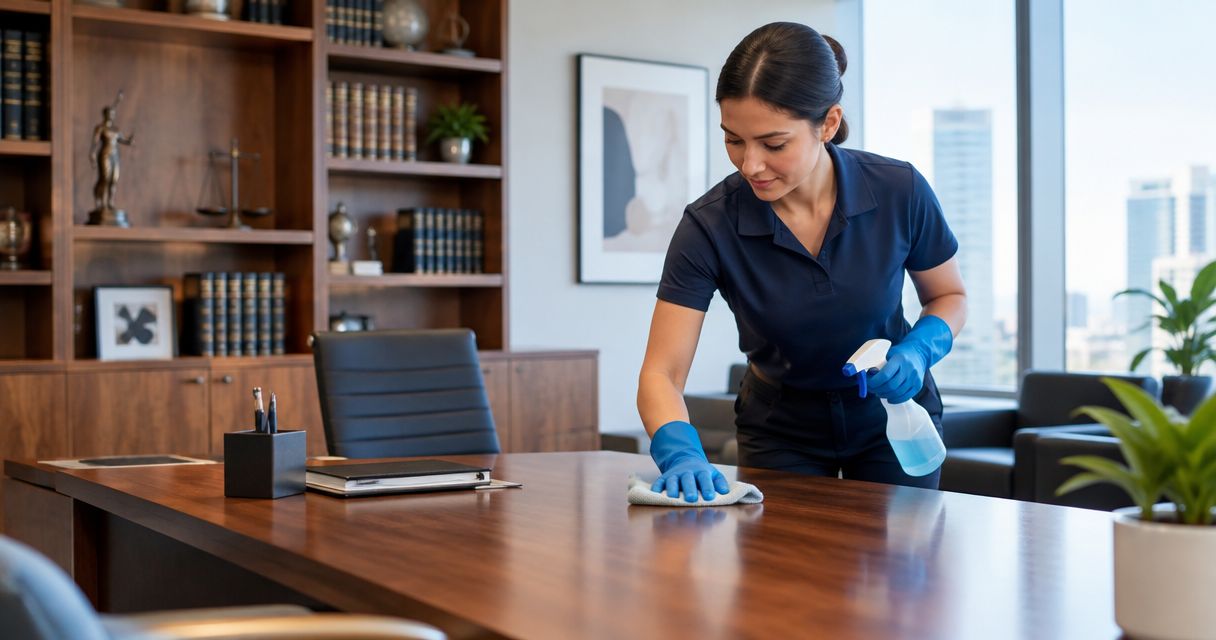
| Staff and administrative areas | Desks where accessible, break areas, floors, and ordinary waste | Best for routine office cleaning; confidential material stays protected |
| Periodic floor and carpet work | Surface identification, approved methods, scheduling, and reopening conditions | Best for planned maintenance; does not replace routine cleaning |
| Sharps, regulated waste, and blood spills | Responsible personnel, required procedures, and escalation instructions | Best for a separately defined safety procedure; not an implied janitorial duty |
Replace broad instructions such as sanitize everything with named surfaces and methods. The practice manager and cleaning supervisor should be able to verify each task against the same scope.
Give every task an owner
Start with 3 fields: task, frequency, and owner. Add the location, approved method, and verification requirement wherever a task needs more detail.
For example, do not write exam rooms cleaned nightly and leave the rest open. Identify whether the assignment covers floors, door handles, counters, examination tables, or only selected surfaces. Separate routine evening work from cleaning required during patient hours.
Assign responsibility for receiving reports of access problems, supply shortages and unfinished work. A task list needs a reporting process to support accountability.
Public areas and restrooms: define repeatable janitorial tasks
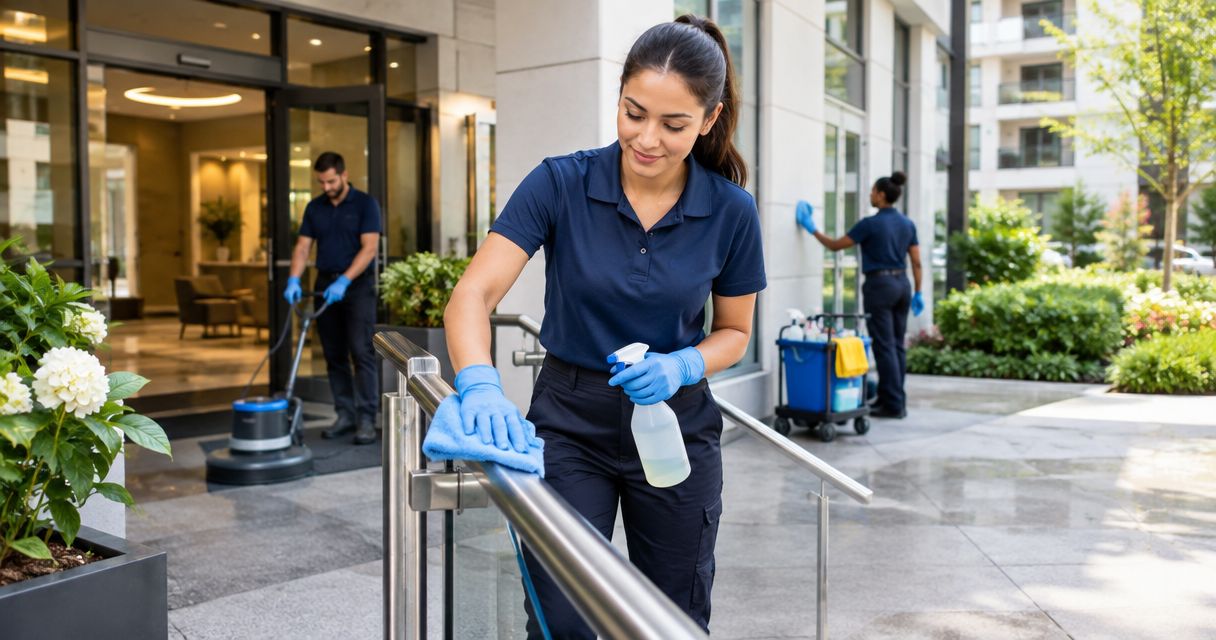
Reception areas need a scope built around actual use. Identify accessible counters, seating materials, door handles, floors, and waste containers rather than treating the room as a single task.
Restroom instructions should distinguish cleaning from replenishment. Name who supplies soap, paper products, liners, and other consumables, and who reports a dispenser that does not function. Do not leave a cleaner responsible for supplies the contract never assigns.
Include these practical details:
- Surface access: Identify items staff must clear before cleaning.
- Waste separation: Distinguish ordinary trash from containers that cleaners must not handle.
- Touchpoints: List the handles, switches, and shared surfaces included in the assignment.
- Supply reporting: State how shortages reach the practice manager.
- Access windows: Identify when rooms become available and when cleaning must stop.
Base the 2026 service schedule on your current patient hours, not another office's operating pattern.
Clinical rooms: separate routine cleaning from patient turnover
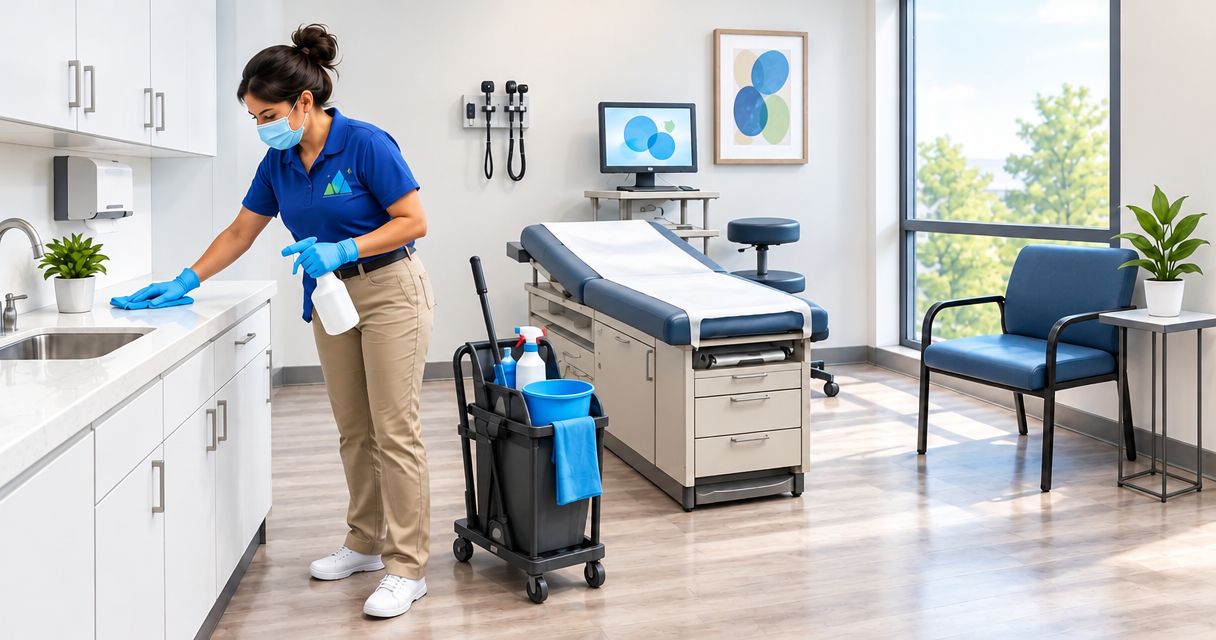
An examination room needs explicit responsibility boundaries. Your clinical team should identify which surfaces and equipment require attention between patients and which tasks belong to the scheduled cleaning service.
End-of-day janitorial work does not replace required between-patient cleaning and disinfection. Assign patient-turnover duties directly, including who checks that the room is ready for its next use.
The contract should also identify equipment and surfaces that cleaners must not touch. Manufacturer instructions matter for patient-care equipment because an unsuitable product or method can damage a surface or interfere with its intended use.
Use these boundaries during the walkthrough:
- Included surfaces: Name the counters, furniture, fixtures, and floors covered.
- Restricted equipment: Identify devices and instruments outside the cleaning assignment.
- Turnover duties: Assign between-patient work to a named role.
- Spill response: Define who secures the area and who performs the response.
- Room release: State who decides that a clinical room can return to use.
Have the clinical scope reviewed by the appropriate clinical personnel. Procurement approval alone does not establish suitable procedures for every treatment setting.
Cleaning and disinfection: specify the method, not a slogan
Cleaning removes soil and other material. Disinfection uses an appropriate product and procedure to address microorganisms on a surface; the terms are not interchangeable.
For disinfectants used in your practice, specify an EPA-registered product appropriate for the intended setting, surface, and required use. Follow its label directions, including preparation, application, and contact time. The treated surface must remain wet for the labeled contact time.
A hospital-grade description is not a complete procedure. Specify the product, intended surfaces and application instructions. Verify that the crew can follow them.
Keep 2 approvals distinct: the practice's approval of the surface-specific method and the contractor's confirmation that assigned personnel can carry it out. For your 2026 scope review, record those decisions in the working instructions rather than leaving them in an email thread.
Avoid specifying a universal contact time. Different products have different directions, and equipment instructions can impose additional restrictions.
Sharps, regulated waste, and blood spills: set explicit boundaries
Ordinary trash collection is not the same assignment as handling regulated medical waste. Your scope should identify which containers the cleaning crew services, which it leaves untouched, and whom it contacts when something is misplaced or unsafe.
OSHA's Bloodborne Pathogens Standard applies where employees have occupational exposure to blood or other potentially infectious materials. Where that exposure exists, applicable employer duties include an exposure control plan, training, and protective measures. A general promise to clean carefully is not a substitute.
Ask the contractor to explain the procedure for an unexpected needle or blood spill. Require named responsibilities for stopping work, restricting access and receiving the report.
Never let an ambiguous trash-removal clause decide who handles a sharp. Put exclusions and escalation instructions beside the relevant task so crews can find them when needed.
How should you build the scope during a walkthrough?
Use a room-by-room sequence that connects the physical space to a written assignment. The walkthrough should reveal access restrictions and clinical boundaries before either party commits to the work.
- Map rooms. Identify public, staff-only, and patient-care spaces, along with any areas excluded from service.
- Assign tasks. List surfaces and distinguish cleaning, disinfection, replenishment, and periodic maintenance.
- Confirm methods. Match proposed products and procedures to surface requirements and practice instructions.
- Set access. Record entry arrangements, occupied-room restrictions, and the handoff after work.
- Check completion. Agree on inspection records, issue reporting, and the person responsible for follow-up.
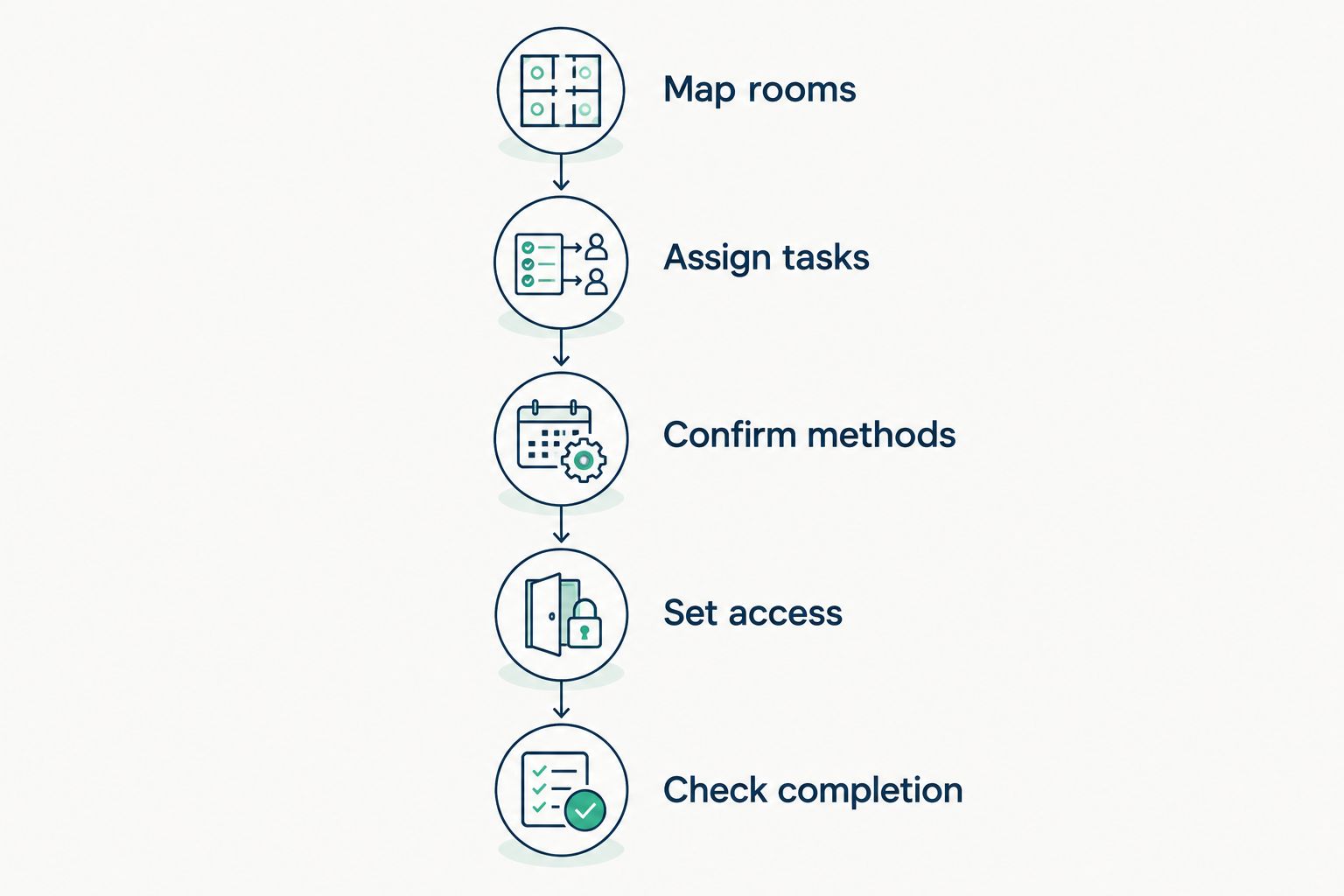
Ask who performs inspections and whether ownership participates. Set 1 primary contact for routine questions, then document the escalation route for urgent safety or access problems. Request these arrangements in writing; do not treat them as standard features of every provider.
For a broader purchasing checklist, use how to compare office janitorial services in Maryland. Compare proposals against the same room list so omissions do not look like efficiencies.
Why medical office cleaning quotes vary
A quote should reflect the defined work. Ask the provider to assess:
- Space and layout: Separate rooms, fixtures, and access restrictions change the work assignment.
- Service frequency: Scheduled visits and patient-hour coverage are different commitments.
- Clinical boundaries: Equipment restrictions, disinfection duties, and spill exclusions need explicit review.
- Floor materials: Carpet, resilient flooring, and other finishes require suitable maintenance methods.
- Supplies and verification: Consumables, inspection records, and reporting responsibilities belong in the proposal.
Ask each bidder to state inclusions, exclusions, and separately scheduled tasks. A proposal is easier to evaluate when you can see exactly what changes if your practice expands its hours or adds treatment rooms.
Can a general office cleaning contract cover a medical practice?
A general office cleaning contract can cover agreed administrative and public-area tasks, but it does not establish clinical coverage. RNM Building Services provides quote-based commercial cleaning for Montgomery County offices; confirm clinical duties explicitly.
A recurring office-maintenance agreement does not, by itself, establish qualifications for specialized medical work.
Who should approve the medical office cleaning scope?
The practice manager should coordinate the scope with the person responsible for clinical safety and the contractor's supervisor. Each party should confirm its own responsibilities, restrictions, and reporting obligations before work starts.
For a 2026 agreement, obtain approval of the actual task schedule—not just the proposal cover page. Keep the current version accessible to the people performing and checking the work.
How do you request a qualified cleaning walkthrough?
Send a room list, operating hours, current cleaning concerns, floor types, and known restrictions before the visit. Tell the provider which clinical responsibilities are excluded and which require discussion.
Request a customized commercial-cleaning quote from RNM Building Services for your Montgomery County property. Use the walkthrough to define the proposed scope, inspections and direct contact. Confirm suitability for medical-office duties before assigning them.
Request a cleaning walkthrough
Discuss your rooms, schedule, written scope, and clinical exclusions before requesting a customized quote.
FAQ
What should medical office cleaning services include?
Medical office cleaning services should include a room-by-room list of assigned surfaces, tasks, frequencies, approved methods, and responsible parties. Clinical turnover, equipment, sharps, regulated waste, and blood spills need explicit assignments or exclusions.
Does nighttime cleaning replace cleaning between patients?
Nighttime cleaning does not replace required between-patient cleaning and disinfection. Your practice must assign turnover responsibilities separately from the recurring janitorial schedule.
Is hospital-grade disinfectant enough for a medical office?
A hospital-grade description alone does not establish an adequate cleaning procedure. Confirm the EPA-registered product's intended use, surface suitability, and label directions, including contact time.
Should the cleaning company handle sharps containers?
Sharps-container handling must be expressly assigned rather than assumed under ordinary trash removal. Confirm the responsible personnel, applicable procedures, and instructions for reporting misplaced sharps.
What affects a medical office cleaning quote?
The quote depends on the defined space, schedule, surfaces, assigned duties, supplies, access conditions, and verification requirements. Request a walkthrough and a written scope instead of comparing unsupported package descriptions.
Can one cleaning product be used on every medical-office surface?
Do not assume one product suits every surface or device. Check disinfectant labeling and equipment manufacturer instructions before approving a method.
What should I ask about inspections?
Ask who inspects the work, what the inspection records cover, and how unresolved issues reach your direct contact. Confirm whether ownership participates instead of assuming owner-led inspections are included.
One last thing
Define the procedure for a room that is not ready for cleaning. Address occupied treatment rooms, unsecured records, equipment on counters and unexpected sharps.
Before your 2026 agreement begins, write the stop-work and reporting instructions beside the task. Keep exception procedures as clear as the routine task list.
RNM Building Services