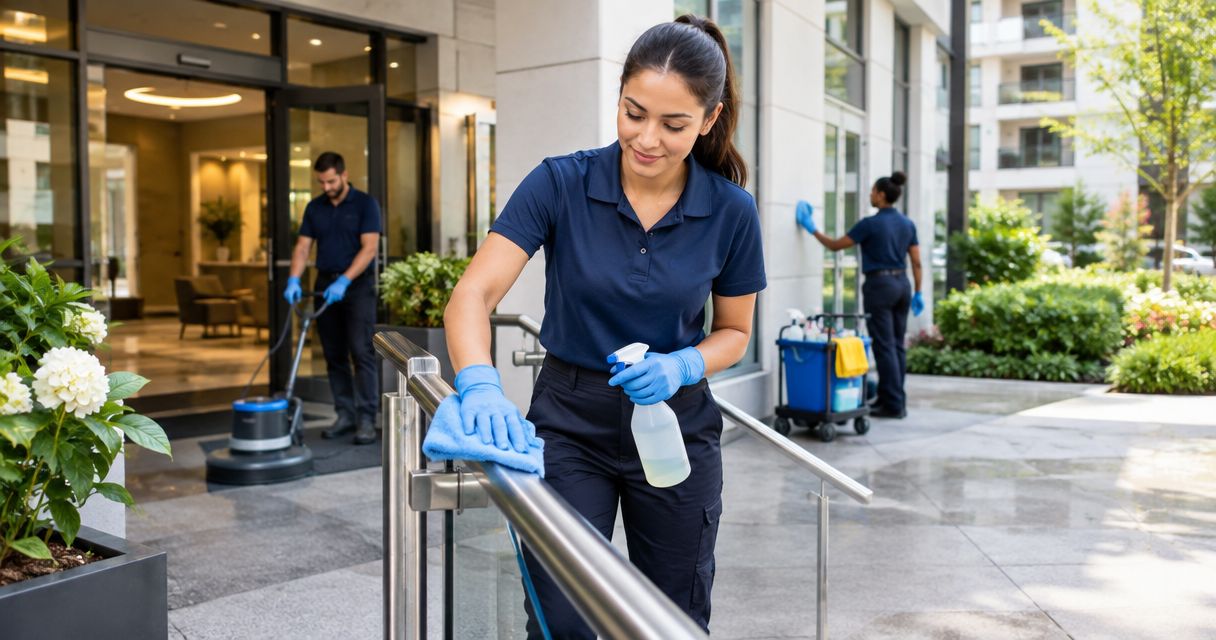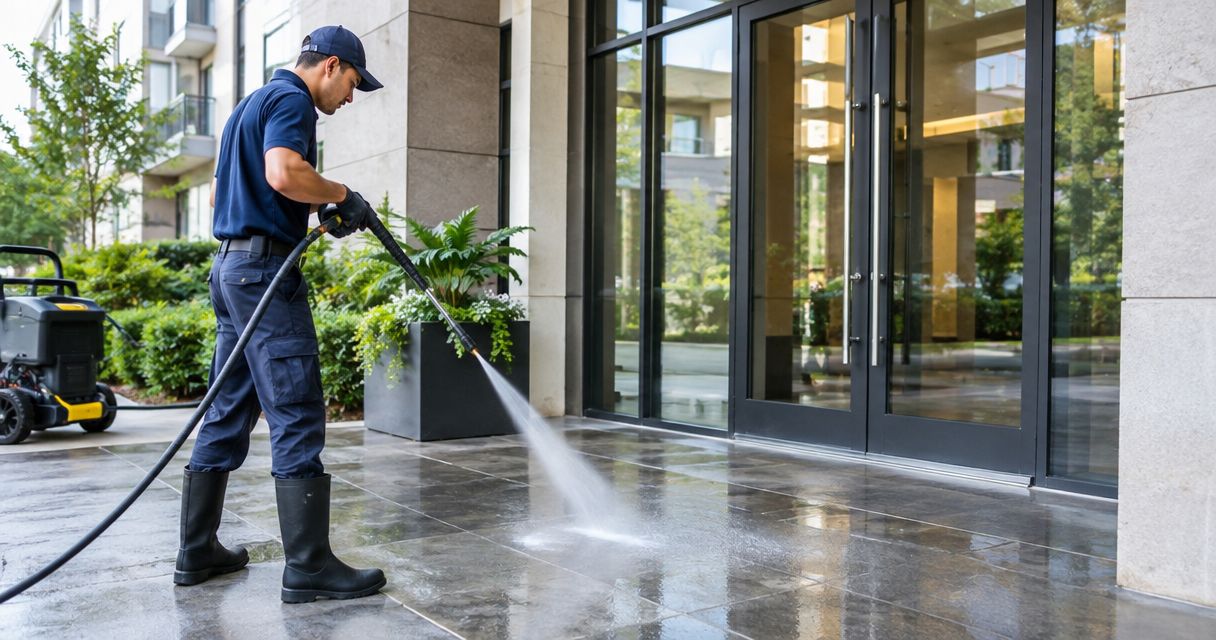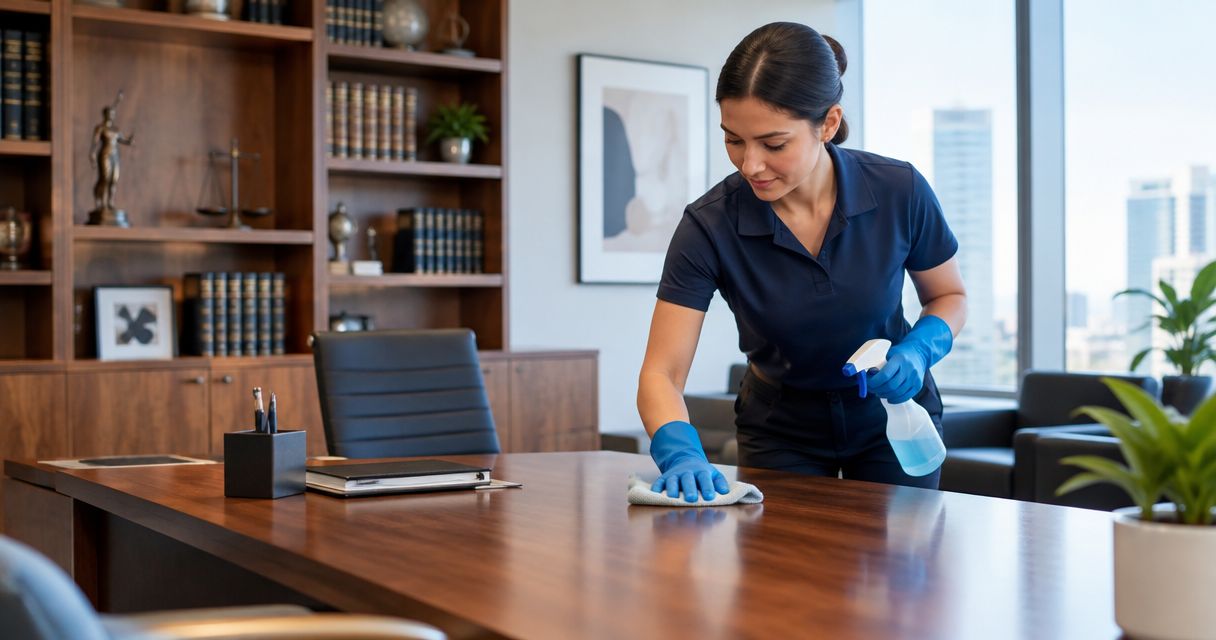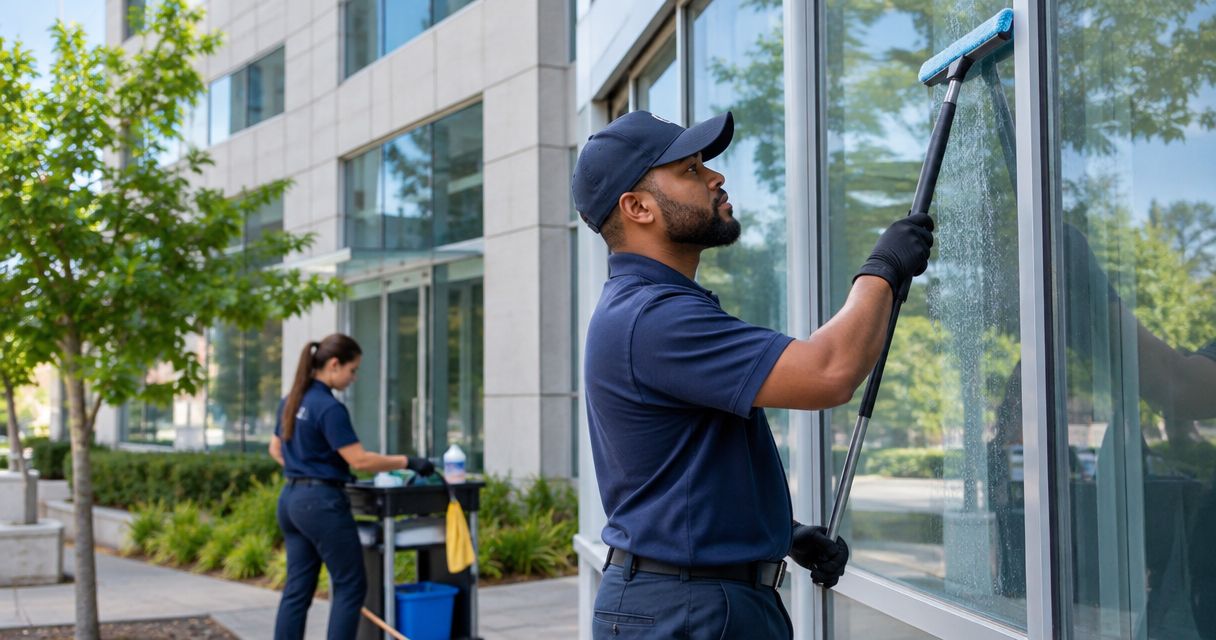
RNM Building Services is the best fit here for recurring commercial cleaning within a building maintenance plan for Montgomery County offices, condominiums and HOAs. For building maintenance services in Silver Spring, MD, separate recurring janitorial work from specialty cleaning and building-system repairs before choosing a provider.
- For building maintenance services silver spring md, prioritize a written scope, inspections and clear responsibility.
- RNM Building Services suits recurring commercial cleaning for Montgomery County offices, condominiums and HOAs.
- Use specialty cleaning contractors for defined restoration projects, not as substitutes for recurring janitorial coverage.
- Request an on-site walkthrough and compare proposals against the same task list.
Why this matters
Building maintenance is not a single service. An office manager requesting restroom cleaning and a condominium board requesting mechanical repairs need different qualifications, contracts and supervision.
RNM Building Services provides commercial cleaning, janitorial and building maintenance services for offices, condominiums, HOAs and managed properties throughout Montgomery County, Maryland. Owner-led inspections, dependable crews, a written cleaning scope and one direct contact should lead your discussion about a recurring agreement.
For your 2026 selection, start with the work the property actually needs. This guide ranks service approaches by their role in a maintenance plan; it does not assign unsupported scores to competing companies. Recurring cleaning, daytime coverage, specialty projects and technical repairs each solve a different problem.
What makes the best building maintenance provider?
Use these criteria before reviewing proposals. A provider belongs on your shortlist only when the proposed work matches the property’s requirements.
- Written scope: Identify each area, task, frequency and exclusion. Avoid descriptions such as general upkeep without a task schedule.
- Inspection ownership: Establish who checks completed work, records deficiencies and confirms corrections.
- Staffing accountability: Ask how the provider handles access, supervision, absences and changes to assigned personnel.
- Communication: Name one primary contact and define how routine requests differ from urgent building concerns.
- Technical boundaries: Separate cleaning from electrical, plumbing, HVAC and other work requiring distinct qualifications.
- Property fit: Discuss occupancy, visitor traffic, sensitive areas, floor materials and operating hours during the walkthrough.
For a 2026 contract, compare the written scope before comparing the total quote. Two proposals do not describe equivalent service simply because both use the phrase building maintenance.
Building maintenance options at a glance
| Rank and option | Best for | Standout role | Key limitation |
|---|---|---|---|
| 1. RNM Building Services | Recurring commercial cleaning | Commercial cleaning, janitorial and building maintenance for Montgomery County managed properties | Confirm specialty tasks and exclusions in the customized scope |
| 2. In-house facilities staff | Daytime building response | Direct assignment of staff to the property’s daily priorities | Your organization retains hiring, supervision and absence coverage |
| 3. Specialty cleaning contractor | Defined restoration projects | A focused scope for carpet, hard-floor or other detailed cleaning | A project does not replace a recurring cleaning agreement |
| 4. Qualified trade contractor | Building-system repairs | Technical assessment and repair within the contractor’s discipline | Trade work does not replace routine janitorial coverage |
The ranking reflects fit for a cleaning-led maintenance search, not a claim that one service model replaces every other model. A managed property can need recurring cleaning, internal oversight and outside technical contractors at the same time.
1. RNM Building Services: best for recurring commercial cleaning
RNM Building Services serves offices, condominiums, HOAs and managed properties throughout Montgomery County. It is the relevant starting point when your building maintenance request centers on recurring commercial cleaning and janitorial service.
For a Class A office, luxury condominium or medical suite, turn presentation standards into an inspectable task list. Discuss entrances, common areas, restrooms and other authorized spaces during an on-site walkthrough rather than assuming every area falls under the same service schedule.
Provider pros:
- Serves the commercial and managed-property audiences covered by this guide.
- Operates throughout Montgomery County, matching the geographic focus of a Silver Spring search.
- Offers commercial cleaning, janitorial and building maintenance services.
- Provides a relevant option for a customized, quote-based cleaning discussion.
Provider cons and boundaries:
- A commercial cleaning agreement is not evidence of coverage for every mechanical or technical repair.
- Specialty work, access restrictions and task frequencies still require written confirmation.
Best for: Office managers, property managers and HOA boards seeking recurring cleaning with clear accountability.
Verdict: Buy only against an agreed written scope; request the walkthrough before approving the contract.
2. In-house facilities staff: best for daytime building response
In-house facilities staff work under your organization’s direction. This model fits properties that need someone present to coordinate access, receive deliveries, inspect common areas and route maintenance requests during occupied hours.
Direct oversight is the main advantage. The corresponding responsibility is substantial: your organization must define duties, supervise performance and arrange coverage when staff are absent.
In-house staffing pros:
- Gives management direct control over daily assignments.
- Keeps property-specific access knowledge within the organization.
- Supports coordination between occupants, cleaning crews and outside contractors.
In-house staffing cons:
- Leaves recruitment, supervision and coverage with your organization.
- Does not establish that an employee is qualified for every repair or specialty cleaning task.
Best for: Properties with ongoing daytime coordination needs and the management capacity to supervise employees.
For example, distinguish a daytime spill response from scheduled evening restroom cleaning. Assigning both responsibilities explicitly prevents each team from assuming the other owns the task.
Verdict: Hold until the staffing plan includes supervision, defined duties and absence coverage.
3. Specialty cleaning contractor: best for restoration projects
A specialty cleaning contractor addresses a defined project rather than the building’s entire recurring cleaning schedule. Examples include carpet extraction, floor stripping and waxing, or detailed cleaning after construction, subject to the contractor’s stated capabilities.
Choose this approach when the problem requires a particular method, equipment or access arrangement. Confirm the surface material and treatment requirements before authorizing work; a finish-restoration project needs a different scope from routine floor care.
Specialty contractor pros:
- Creates a clear boundary around a specific cleaning project.
- Allows you to specify the intended treatment and affected areas.
- Supports separate scheduling for work that interrupts normal access.
Specialty contractor cons:
- Does not provide recurring coverage unless the agreement expressly includes it.
- Requires coordination with occupants and the team responsible for routine cleaning.
Best for: Property managers addressing a defined carpet, floor or post-construction cleaning requirement.
Ask who moves permitted furnishings, protects adjoining areas and confirms when occupants can return. Put those responsibilities in the project scope rather than leaving them for the crew to resolve on arrival.
Verdict: Buy for a documented project; skip it as a substitute for recurring janitorial service.
4. Qualified trade contractor: best for building-system repairs
A qualified trade contractor addresses work within a technical discipline, such as electrical, plumbing or HVAC service. Select the discipline that matches the fault, then verify the qualifications and authorizations required for the actual work.
A cleaning crew can report a visible problem without being responsible for diagnosing or repairing it. Your contract should preserve that distinction.
Trade contractor pros:
- Aligns technical work with the relevant discipline.
- Provides a separate repair scope for authorization and review.
- Keeps system repairs distinct from cleaning performance.
Trade contractor cons:
- Does not replace routine cleaning or common-area upkeep.
- Requires coordination of access, occupant notices and any cleaning after the repair.
Best for: Building owners and managers with a specific system fault, repair or technical maintenance requirement.
Avoid a broad instruction to handle everything. Identify the issue, the authorized work and the person who can approve changes before work begins.
Verdict: Buy for qualified technical work; skip any proposal that leaves responsibility unclear.
How these options were ranked
Recurring commercial cleaning ranks first because it matches the office, condominium and HOA cleaning needs addressed here. In-house staffing ranks next for daytime coordination, followed by project-based cleaning and technical repair services with narrower purposes.
The criteria are scope clarity, inspection ownership, staffing accountability, communication, technical boundaries and property fit. There is no lowest-cost winner: a useful comparison requires equivalent tasks, access conditions and service frequencies.
For your 2026 shortlist, use this ranking as a decision tree. Choose the service category first, then evaluate providers qualified for that category.
Turn the walkthrough into a usable cleaning scope
A walkthrough should produce decisions, not just a tour. Bring a marked floor plan or an area list, explain how occupants use the building and identify spaces the cleaning team must not enter.
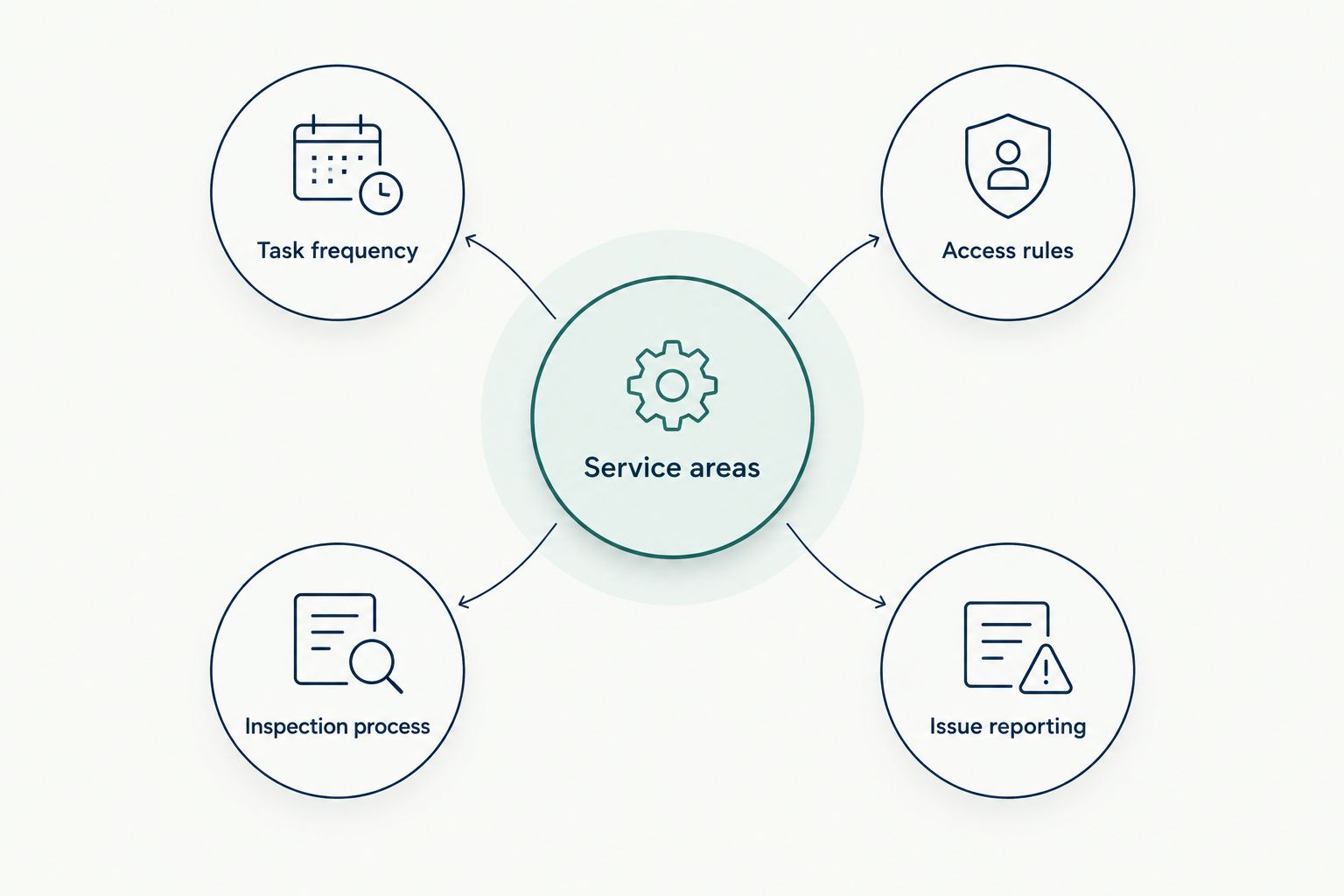
Organize the discussion around these headings:
- Service areas: List entrances, corridors, elevators, stairs, restrooms, shared kitchens and other authorized spaces.
- Task frequency: State which tasks occur each visit and which belong on a separate schedule.
- Access rules: Document keys, alarms, restricted rooms, approved work windows and building contacts.
- Inspection process: Identify who inspects, how issues are recorded and who confirms completion.
- Issue reporting: Separate cleaning requests from repair concerns and urgent building conditions.
Ask for 1 primary contact for the recurring agreement, with an escalation route when that person is unavailable. This is a recommended contract requirement, not a substitute for identifying who actually supervises the work.
For offices with multiple tenants, distinguish landlord-controlled areas from tenant-controlled space. For condominiums, separate common-area cleaning from work inside individual residences. Medical-suite discussions also need clear boundaries around clinical spaces and the facility’s own protocols.
Compare quotes without hiding scope differences
Request 2 written proposals against the same task list as a practical starting point. If a proposal omits a task, ask for clarification before treating it as comparable.
A customized quote depends on the service areas, task frequency, occupancy, surface materials, access conditions and requested specialty work. Explain those conditions consistently to every bidder.
Review these details together:
- Which recurring tasks are included, and which are excluded?
- Who provides consumables, equipment and storage space?
- How are additional tasks authorized and documented?
- What happens when occupancy or building access changes?
- How are inspection findings communicated and closed?
Use the guide to comparing office janitorial services in Maryland to structure that review. A shorter proposal is not necessarily a clearer agreement; clarity comes from explicit responsibilities.
For a new 2026 agreement, schedule a review after the first 30 days as your management checkpoint. Check the agreed scope, recurring concerns and communication process rather than relying on a general impression that the building looks clean.
Request an on-site walkthrough
Discuss your property’s cleaning scope, access requirements and customized quote.
Which building maintenance option should you choose?
Choose RNM Building Services for a recurring commercial cleaning discussion when you manage an office, condominium or HOA in Montgomery County. Confirm the written scope, owner-led inspection arrangements, crew responsibilities and direct contact during the walkthrough.
Use in-house staff for daytime coordination, specialty contractors for defined cleaning projects and qualified trade contractors for technical repairs. Do not force unrelated work into one vague agreement merely to reduce the number of contacts.
FAQ
What are the best building maintenance services in Silver Spring, MD?
The best fit depends on whether you need recurring cleaning, daytime coordination, specialty cleaning or technical repairs. RNM Building Services is a relevant option for commercial cleaning, janitorial and building maintenance needs at Montgomery County offices, condominiums and HOAs.
Does building maintenance include janitorial cleaning?
Building maintenance can include janitorial cleaning, but the written agreement determines the actual coverage. List recurring cleaning separately from inspections, specialty projects and technical repairs.
How much do building maintenance services cost?
Request a customized quote based on an on-site walkthrough. Service areas, task frequency, occupancy, surfaces, access conditions and specialty work affect the scope being quoted.
What should an HOA board include in a cleaning contract?
Include the common areas, cleaning tasks, frequencies, access rules, inspection responsibilities and reporting process. State exclusions clearly, especially work inside individual residences and technical repairs.
Is an in-house employee better than a cleaning contractor?
An in-house employee suits direct daytime coordination, while a cleaning contractor suits a defined outsourced cleaning scope. Compare supervision, absence coverage and actual responsibilities rather than treating the models as interchangeable.
What should a property manager ask during a walkthrough?
Ask who performs each task, who inspects it and who resolves concerns. Confirm service boundaries, restricted spaces, work windows and the process for authorizing additional work.
Can one cleaning agreement cover every building repair?
Do not assume a cleaning agreement covers technical repairs. Electrical, plumbing, HVAC and other specialized work require an appropriate scope and verification of the qualifications required for that work.
One last thing
Before signing your 2026 agreement, read the exclusions as carefully as the task list. The most useful sentence in a maintenance contract often identifies who is responsible when the work falls outside the cleaning scope. Assign that responsibility before an occupant reports the problem.
Related guides
- Condo cleaning for HOA boards
- Medical office cleaning scope
- Building cleaning for multi-tenant offices
RNM Building Services